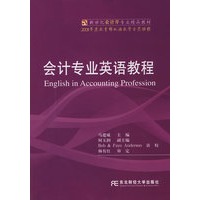
| Part Ⅰ Financial Accounting Chapter 1 Financial Accounting Conceptual Framework 1.1 The Purpose of Accounting and Financial Reporting 1.2 Accounting Basis and Accounting Assumptions 1.3 Financial Accounting Principles and Measurement Bases 1.4 Qualitative Characteristics of Accounting Information Chapter 2 Accounting for Assets (Ⅰ) 2.1 Cash and Internal Control over Cash Transactions 2.2 Accounts Receivable and Notes Receivable 2.3 Inventories Chapter 3 Accounting for Assets (Ⅱ) 3.1 Plant and Equipment 3.2 Accounting for Intangibles 3.3 Investments Chapter 4 Liabilities 4.1 Current Liabilities 4.2 Long-Term Liabilities Chapter 5 Owners' Equity 5.1 Income, Expenses and Profits 5.2 Owners' Equity Chapter 6 Financial Reports 6.1 Financial Statements 6.2 Notes and Other Information Part Ⅱ Cost and Management Accounting Chapter 7 Calculation and Management of the Cost 7.1 Full Costing 7.2 Deriving Full Costs 7.3 Activity-Based Costing 7.4 Cost and Pricing Chapter 8 The Behavior of Costs and Decision 8.1 The Relevant Costs 8.2 The Behavior of Costs 8.3 Cost-Volume-Profit Analysis 8.4 Marginal Analysis and Decision Chapter 9 Budgeting and Budgetary Control 9.1 Budgets and Plans 9.2 The Budget-Setting Process 9.3 Variance and Budgetary Control Part Ⅲ Corporate Finance Chapter 10 Financial Operations 10.1 Financial Instruments and Markets 10.2 The Financing Decision 10.3 The Investment Decision Chapter 11 Evaluating Financial Performance 11.1 The Cash Flow Cycle 11.2 Financial Statements and the Value Problem 11.3 The Levers of Financial Performance 11.4 Ratio Analysis Part Ⅳ Auditing Chapter 12 Auditing Principles 12.1 Auditing Basis and Auditing Objectives 12.2 Materiality and Auditing Risk 12.3 Auditing Evidence and Auditing Sampling Chapter 13 Audit Working Papers and Auditing Reports 13.1 Auditing Working Papers 13.2 Auditing Reports Chapter 14 Other Assurance Engagements and Quality Control 14.1 Other Assurance Engagements 14.2 Quality Control Main References |




 内容加载中,请稍后...






商品评论(0条)