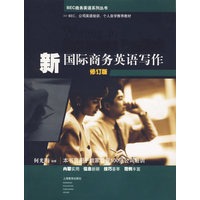
| BEC、公司英语培训、个人自学推荐教材 《新国际商务英语写作(修订版)》曾用于数学世界500强公司培训 内容实用 信息新颖 技巧荟萃 范例丰富 |
| 何光明,国际商务英语硕士,资深商务英语培训师,高级商务英语翻译。于昂立教育从事商务英语教学与研究多年,精于BEC初中高级(Preliminary/Vantage/Higher)各个级别的教学,具有丰富的企业英语施训经验,曾于美标、花旗、西门子等数家跨国公司开展商务英语培训。精通国际贸易进出口业务流程,曾为数家公司提供咨询服务,并长期兼职担任国际贸易洽谈翻译。 发表论文数篇,出版著作如:《中级笔译辅导教程》(编委)(上海交通大学出版社)、《大学英语综合教程全程导读》两册(副主编)(世界图书出版公司)、《剑桥商务英语辅导教程BEC1》(主编)(上海交通大学出版社)、《剑桥商务英语辅导教程BEC2》(主编)(上海交通大学出版社)。 |
| Contents Section 1: General Tips for Modern Business Writing 1.1 Avoiding wordy and redundant phrases 1.2 Using small words 1.3 Avoiding sexist language 1.4 Using modem business language 1.5 Using less clichrs and jargon 1.6 Avoiding vague expressions 1.7 Avoiding negative wording 1.8 Knowing the proper use of the commonly misused words and phrases 1.9 Using active voice more 1.10 Using more short sentences 1.11 Using a natural, conversational style 1.12 Using courteous expressions 1.13 Using YOUR attitude 1.14 Using more paragraphs 1.15 Shortening or deleting warming-up paragraphs 1.16 Identifying the purpose of the writing in the beginning 1.17 Basing your opinion on facts 1.18 Crossing out unnecessary closings Section 2: Grammar Focus 2.1 Sentence construction (1) 2.2 Sentence construction (2) 2.3 Avoiding awkward constructions (1) 2.4 Avoiding awkward constructions (2) 2.5 The use of punctuation 2.6 Rules of capitalization 2.7 The usage of prepositions 2.8 The paragraph Section 3: Memorandums (Interoffice Memos) 3.1 What is a memo? 3.2 The purpose of a memo 3.3 The layout of a memo 3.4 Memos and emails 3.5 Tips for writing memos 3.6 Samples Section 4: Emails 4.1 What is an email? 4.2 The layout of a letter 4.3 The layout of an email 4.4 Beginnings and endings of an email 4.5 Emails and letters 4.6 Five golden rules for writing emails 4.7 Tips for writing emails 4.8 Business email etiquette 4.9 Samples Section 5: Faxes 5.1 What is a fax? 5.2 Components of a fax 5.3 The format of a fax 5.4 The pages of a fax 5.5 Samples Section 6: Notices and Instructions 6.1 What is a notice or an instruction? 6.2 Principles for writing a notice or an instruction 6.3 Guidelines to remember 6.4 Components of a notice or an instruction 6.5 Samples Section 7: Agendas and Minutes 7.1 Agendas 7.2 Tips for creating effective agendas 7.3 Agenda samples 7.4 Minutes 7.5 Steps for minutes taking and writing 7.6 Components of minutes 7.7 Tips for the minutes taker 7.8 Common symbols for minutes taking 7.9 Minutes samples Section 8: Business Reports 8.1 What is a business report? 8.2 A general structure for formal business reports 8.3 Suggested structures for other kinds of reports 8.4 Tips for improving report readability 8.5 Formal business report writing process 8.6 Common expressions for business reports 8.7 Report samples in the appendix Section 9: Proposals 9.1 What is a proposal? 9.2 Golden rules for writing a proposal 9.3 Tips for writing proposals 9.4 Components of an informal proposal 9.5 Components of a formal proposal 9.6 Samples Section 10: Contracts and Agreements 10.1 What are an agreement and a contract? 10.2 Components of contracts and agreements t0.3 Main types of contracts and agreements 10.4 Components of a commercial contract 10.5 Samples Section 11: Resume/Curriculum Vitae, Application Letters, and Follow-up Thank-You Letters 11.1 What is a resume (curricular vitae)? 11.2 Tips for writing winning resumes 11.3 Resume samples 11.4 Common expressions for resumes 11.5 What is an application letter? 11.6 Tips for writing winning application letters 11.7 Application letter samples 11.8 Common expressions for application letters 11.9 What is a thank-you letter? 11.10 Thank-you letter samples Section 12: Letters for Social Purposes 12.1 Letters of introductions, recommendations and references 12.2 Letters of invitations and their reply 12.3 Letters of thanks 12.4 Letters of goodwill- congratulations, encouragement, condolence, commending,seasonalwishes Section 13: Letters for Other Purposes 13.1 Letters of apologies 13.2 Letters for requesting favors 13.3 Letters for booking 13.4 Letters for making an appointment 13.5 Letters of confirmation 13.6 Letters for calling for an interview 13.7 Letters of resignation Section 14: Letters and Vocabulary for Import and Export Business 14.1 Establishing business relations 14.2 Inquiries 14.3 Replies and offers 14.4 Acceptance and orders 14.5 Standing enquiries 14.6 Packing 14.7 Insurance 14.8 Shipment 14.9 Payment by L/C 14.10 Other modes of payment 14.11 Collection 14.12 Complaints and claims 14.13 Claim settlement 14.14 Agency 14.15 Compensation trade and processing with supplied materials Appendix Answer Key References |



 内容加载中,请稍后...





商品评论(0条)