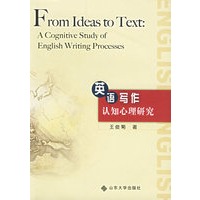
| 王俊菊,博士,山东大学外国语学院教授,应用英语系主任。1987年获山东大学英语文学学士学位,1993获山东大学双语翻译文学硕士学位,2004年获香港中文大学应用语言学哲学博士学位。1999—2000在英国雷丁大学做访问学者,并访学美国、加拿大,新加坡、韩国等地。长期从事英语教学和应用语言学领域的研究工作。合著有Introduc-tiontoAcademicWriring,主编、参编教材和学习书籍多部,并在AsianJournalofEnglishLaguageTeaching、JournalofAsiarlTEFL等国内外重要学术期刊上发表论文多篇。 |
| Foreword by Guy Cook Foreword by Yah Huang List of Abbreviations List of Tables List of Figures Chapter 1 An Overview 1.1 Introduction 1.2 Statement of the Problem 1.3 Purpose and Method of the Study 1.4 Significance of the Study 1.5 Organization of the Book PART I A LITERATURE REVIEW OF PREVEIOUS STUDIES Chapter 2 Studies on ENL Writing Processes 2.1 Introduction 2.2 Studies on the General Writing Process 2.3 Studies on the Sub-processes of Writing 2.4 Cognitive Models of the Writing Process 2.5 Chapter Summary Chapter 3 Studies on ESL Writing Processes 3.1 Introduction 3.2 Studies 0n theGeneral:ProcesS of ESL Writing 3.3 Comparison of L1 and ESL Writing Processes 3.4 Use of the L1 and Translation in ESL Writing Processes 3.5 Chapter Summary Chapter 4 Studies on EFL/FL Writing Processes 4. 1 Introduction 4.2 Comparison of L1 and EFL/FL Writing Processes 4.3 Use of the L1 and Translation in EFL/FLComposing Processes 4.4 Learning Strategy Use and EFL/FL WritingProcesses 4.5 Knowledge Level and EFL/FL Writing Processes 4.6 Chapter Summary Chapter 5 Studies on the Writing Processes of Chinese Learners of English 5.1 Introduction 5.2 Studies on the Writing Processes of Chinese ESL Learners 5.3 Studies on the Writing Processes of Chinese EFL Learners 5.4 Chapter Summary PART II A QUALITATIVE STUDY ON THE ENGLISH ICVRITING PROCESSES OF CHINESE EFL LEARNERS Chapter 6 Rationale for the Study 6.1 Introduction 6.2 Need for Studies on EFL Writing Processes 6.3 Need for Studies on EFL Writers with Different English Proficiency 6.4 Need for Studies on the Writing Processes of Chinese EFL Learners 6.5 Need for Studies On Norr-English Majors in the Chinese Context 6.6 Methodological Strengths of the Study 6.7 Chapter Summary Chapter 7 Methodology 7.1 Introduction 7.2 Safeguards for the Research Design of the Study 7.3 The Participants 7.4 Sources of Data 7.5 Procedures for Data Collection 7.6 Rationale for the Think-aloud Protocol as the Main Source of Data 7.7 Analysis of the Data 7.8 Chapter Summary Chapter 8 Backgrounds, Perceptio/ts and Attitudes,Writing Processes, and Written Compositions of the Band 4 Group 8.1 Introduction 8.2 Writing Backgrounds of the Band 4 Group 8.3 Perceptions and Attitudes of the Band 4 Group 8.4 Writing Processes of the Band 4 Group 8.5 Features of Written Compositions of the Band 4 Group 8.6 Chapter Summary Chapter 9 Backgrounds, Perceptions and Attitudes,Writing Processes,and Written Compositions of the Band 6 Group 9.1 Introduction 9.2 Writing Backgrounds of the Band 6 Group 9.3 Perceptions and Attitudes of the Band 6 Group 9.4 Writing Processes of the Band 6 Group 9.5 Features of Written Compositions of the Band 6 Group 9.6 Chapter Summary Chapter 10 Backgrounds, Perceptions and Attitudes,Writing Processes, and Written Compositions of the Band 8 Group 10.1 Introduction 10.2 Writing Backgrounds of the Band 8 Group 10.3 Perceptions and Attitudes of the Band 8 Group 10.4 Writing Processes of the Band 8 Group 10.5 Features of Written Compositions of the Band 8 Group 10.6 Chapter Summary Chapter 11 Cross-group Analysis of Subprocesses, Strategies,Written Compositions, and the Role of the Mother Tongue 11.1 Introduction 11.2 Sub-processes 11.3 Adoption of Writing Strategies by Category 11.4 Cross-group Tendencies in Writing Strategy Use 11.5 Role of the Mother Tongue 11.6 Features of Written Compositions 11.7 Chapter Summary PART III INISIGHTS INTO EFL WRITING AND ITS INSTRUCTIONS IN THE CHINESE CONTEXT Chapter 12 Relating L2 Proficiency to Thought Presentation,L2 Writing Competence, and the EFL Writing Process 12.1 Introduction 12. 2 Audience Awareness, Writing Fluency, Patterns,and Diversities 12. 3 Patterns and Tendencies in Writing Strategy Use 12.4 Mother Tongue, Medium of Thought, and Thought Presentation 12.5 A Model of L2 Writing Competence 12.6 A Model of the Writing Processes of Chinese EFL Learners 12.7 Chapter Summary Chapter 13 Towards.a Model:for EFL Writing Instructions in the Chinese Context 13.1 Introduction 13.2 Pedagogical Implications for EFL Writing Instruction 13.3 Towards a Trinity Model:for EFL Writing Instructions in the Chinese Context 13.4 Chapter Summary Chapter 14 Conclusions and Recommendations 14.1 Summary of the Studio 14.2 Limitations:ofith'e Study 14.3 Suggestioris fortFurther Research 14.4 Concluding Remarks References Appendix Ⅰ Questionnaire Appendix Ⅱ The Writing Prompt Appendix Ⅲ Questions Guiding Semi—structured Interviews |



 内容加载中,请稍后...







商品评论(0条)