最 低 价:¥89.70

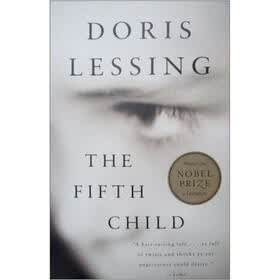
| "Doris Lessing is the kind of writer who has followers, not just readers," Lesley Hazleton once observed. But the Nobel Prize-winning Lessing, whose classic novel The Golden Notebook was embraced as a feminist icon, has seldom told her followers exactly what they wanted to hear. For much of her career, she has frustrated readers' expectations and thwarted would-be experts on her work, penning everything from traditional narratives to postmodern novels to mystic fables. Lessing was born in Persia (now Iran) and grew up in Southern Rhodesia (now Zimbabwe), where her father made an unsuccessful attempt to farm maize. Though she loved living on the farm, her family life was often tense and unhappy. Lessing married at the age of 20, but three years later, feeling stifled by colonial life and increasingly distressed by the racism of her society, she joined the Communist Party, "because they were the only people I had ever met who fought the color bar in their lives." Soon after that, she left her husband and first two children to marry fellow Communist Gottfried Lessing, with whom she had a son. They divorced, and she took her son with her to England, where she published her first novel, The Grass Is Singing, to high acclaim. After several more novels, including the semi-autobiographical series Children of Violence, Lessing wrote The Golden Notebook, a postmodern, fragmentary narrative about a writer's search for identity. The Golden Notebook gained a passionate following in the feminist movement and "left its mark upon the ideas and feelings of a whole generation of women," as Elizabeth Hardwick wrote. To Lessing's dismay, she was frequently cited as a "feminist writer" after that. Yet as Diane Johnson pointed out in a 1978 review of Stories, Lessing "also understands men, politics, social class, striving, religion, loneliness and lust." Johnson added: "Mrs. Lessing is the great realist writer of our time, in the tradition of the major Continental novelists of the 19th century, particularly Stendhal and Balzac, but also Turgenev and Chekhov -- a masculine tradition with which she shares large moral concerns, an earnest and affirmative view of human nature, and a dead-eye for social types." |



 内容加载中,请稍后...


商品评论(0条)