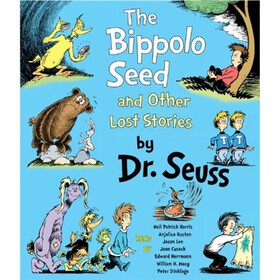
Now that generations of readers have been reared on The Cat in the Hat and Fox in Socks, it's easy to forget how colorless most children's books were before Dr. Seuss reinvented the genre. When the editorial cartoonist Theodor Seuss Geisel wrote And to Think That I Saw It on Mulberry Street in 1936, the book was turned down by 27 publishers, many of whom said it was "too different." Geisel was about to burn his manuscript when it was rescued and published, under the pen name Dr. Seuss, by a college classmate.
Over the next two decades, Geisel concocted such delightfully loopy tales as The 500 Hats of Bartholomew Cubbins and Horton Hears a Who. Most of his books earned excellent reviews, and three received Caldecott Honor Awards. But it was the 1957 publication of The Cat in the Hat that catapulted Geisel to celebrity.
Rudolf Flesch's book Why Johnny Can't Read, along with a related Life magazine article, had recently charged that children's primers were too pallid and bland to inspire an interest in reading. The Cat in the Hat, written with 220 words from a first-grade vocabulary list, "worked like a karate chop on the weary little world of Dick, Jane and Spot," as Ellen Goodman wrote in The Detroit Free Press. With its vivid illustrations, rhyming text and topsy-turvy plot, Geisel's book for beginning readers was anything but bland. It sold nearly a million copies within three years.
苏斯博士(1904-1991),本名西奥多·苏斯·盖泽尔(Theodor Seuss Geisel),是美国人最引以为傲的儿童文学作家之一。在白宫发布的美国文化“梦之队”中,他的名字与《夏洛的网》的作者E.B.怀特以及《草原小屋》的作考怀尔德并列。同时,苏斯博士还是一位高妙的画家,他亲自为自己的书绘制漂亮的插图。
那些由他自己撰文并绘制插图的作品都以“苏斯博士”(Dr.Seuss)来署名,比如《穿袜子的狐狸》、《绿鸡蛋和火腿》、《霍顿孵蛋》、《乌龟耶尔特及其他故事》等。而由他本人撰文、别人插图的作品则用Theo LeSie9(LeSieq是Geisel的倒写)和罗塞塔·斯通(Rosetta Stone)来署名,例如《头顶十个苹果》(Ten Apples up on Top)和《小虫打喷嚏》(When the Little Bu9 Went Ka·Choo)。
其实,苏斯博士并没有真正获得过博士学位。1925年自达特茅斯大学毕业后,他又去牛津大学攻读文学博士学位,但因为受不了沉闷枯燥的学校生活而中途辍学。他开始进行儿童文学创作时需要一个笔名,就饶有风趣地用上了“苏斯博士”。他说:“我父亲一直希望看到我的名字前能冠上‘博士’,我就自己加上去了。这样做我想至少省了他上万块钱。” |



 内容加载中,请稍后...



商品评论(0条)