最 低 价:¥54.50

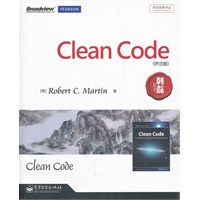
作者简介 Robert C. Martin 软件工程领域的大师级人物,设计模式和敏捷开发运动的主要倡导者之一,曾经担任C++ Report杂志主编多年。他的Agile Software Development: Principles, Patterns, and Practices一书曾荣获Jolt大奖。 评注者简介 韩磊 技术管理者和作译者,互联网专家。2001年创办CoDelphi.com中文开发在线网站;2003年加入CSDN,历任网络总监、副总经理、CSDN网站和《程序员》杂志总编辑等职;2010年加入21世纪传媒,现任21世纪新媒体副总经理、CTO。拥有美国Borland公司“Delphi产品专家”及“微软最有价值专家”称号。译有《C#编程风格》(Elements of C# Style)、《梦断代码》(Dreaming in Code)、《代码整洁之道》(Clean Code),合著有《网络媒体教程》,合译有《Beginning C# Objects:对象到代码》。 |
目 录 Chapter 1: Clean Code(新增评注47条) 1 There Will Be Code 2 Bad Code 3 The Total Cost of Owning a Mess 5 The Grand Redesign in the Sky 6 Attitude 6 The Primal Conundrum 7 The Art of Clean Code? 8 What Is Clean Code? 9 Schools of Thought 15 We Are Authors 17 The Boy Scout Rule 18 Prequel and Principles 18 Conclusion 18 Bibliography 19 Chapter 2: Meaningful Names(新增评注19条) 21 Introduction 21 Use Intention-Revealing Names 22 Avoid Disinformation 24 Make Meaningful Distinctions 25 Use Pronounceable Names 26 Use Searchable Names 27 Avoid Encodings 28 Hungarian Notation 28 Member Prefixes 29 Interfaces and Implementations 29 Avoid Mental Mapping 30 Class Names 30 Method Names 30 Don’t Be Cute 31 Pick One Word per Concept 32 Don’t Pun 32 Use Solution Domain Names 33 Use Problem Domain Names 33 Add Meaningful Context 33 Don’t Add Gratuitous Context 35 Final Words 36 Chapter 3: Functions(新增评注25条) 39 Small! 42 Blocks and Indenting 43 Do One Thing 44 Sections within Functions 45 One Level of Abstraction per Function 45 Reading Code from Top to Bottom:The Stepdown Rule 46 Switch Statements 46 Use Descriptive Names 48 Function Arguments 49 Common Monadic Forms 50 Flag Arguments 50 Dyadic Functions 51 Triads 52 Argument Objects 52 Argument Lists 52 Verbs and Keywords 53 Have No Side Effects 53 Output Arguments 54 Command Query Separation 55 Prefer Exceptions to Returning Error Codes 56 Extract Try/Catch Blocks 57 Error Handling Is One Thing 57 The Error.java Dependency Magnet 57 Don’t Repeat Yourself 58 Structured Programming 59 How Do You Write Functions Like This? 59 Conclusion 60 SetupTeardownIncluder 60 Bibliography 62 Chapter 4: Comments(新增评注18条) 65 Comments Do Not Make Up for Bad Code 67 Explain Yourself in Code 68 Good Comments 68 Legal Comments 68 Informative Comments 69 Explanation of Intent 69 Clarification 70 Warning of Consequences 71 TODO Comments 71 Amplification 72 Javadocs in Public APIs 72 Bad Comments 72 Mumbling 73 Redundant Comments 73 Misleading Comments 76 Mandated Comments 76 Journal Comments 77 Noise Comments 78 Scary Noise 80 Don’t Use a Comment When You Can Use a Function or a Variable 80 Position Markers 80 Closing Brace Comments 81 Attributions and Bylines 82 Commented-Out Code 82 HTML Comments 83 Nonlocal Information 83 Too Much Information 84 Inobvious Connection 84 Function Headers 84 Javadocs in Nonpublic Code 85 Example 85 Bibliography 88 Chapter 5: Formatting(新增评注13条) 89 The Purpose of Formatting 90 Vertical Formatting 90 The Newspaper Metaphor 91 Vertical Openness Between Concepts 92 Vertical Density 93 Vertical Distance 94 Vertical Ordering 99 Horizontal Formatting 99 Horizontal Openness and Density 100 Horizontal Alignment 101 Indentation 103 Dummy Scopes 104 Team Rules 105 Uncle Bob’s Formatting Rules 106 Chapter 6: Objects and Data Structures(新增评注12条) 109 Data Abstraction 110 Data/Object Anti-Symmetry 111 The Law of Demeter 114 Train Wrecks 115 Hybrids 116 Hiding Structure 116 Data Transfer Objects 117 Active Record 118 Conclusion 118 Bibliography 119 Chapter 7: Error Handling(新增评注7条) 121 Use Exceptions Rather Than Return Codes 122 Write Your Try-Catch-Finally Statement First 123 Use Unchecked Exceptions 125 Provide Context with Exceptions 126 Define Exception Classes in Terms of a Caller’s Needs 126 Define the Normal Flow 128 Don’t Return Null 129 Don’t Pass Null 130 Conclusion 131 Bibliography 131 Chapter 8: Boundaries(新增评注6条) 133 Using Third-Party Code 134 Exploring and Learning Boundaries 136 Learning log4j 137 Learning Tests Are Better Than Free 138 Using Code That Does Not Yet Exist 139 Clean Boundaries 140 Bibliography 141 Chapter 9: Unit Tests(新增评注13条) 143 The Three Laws of TDD 144 Keeping Tests Clean 145 Tests Enable the -ilities 146 Clean Tests 147 Domain-Specific Testing Language 150 A Dual Standard 150 One Assert per Test 153 Single Concept per Test 154 F.I.R.S.T. 155 Conclusion 156 Bibliography 156 Chapter 10: Classes(新增评注12条) 157 Class Organization 158 Encapsulation 158 Classes Should Be Small! 158 The Single Responsibility Principle 161 Cohesion 162 Maintaining Cohesion Results in Many Small Classes 163 Organizing for Change 169 Isolating from Change 172 Bibliography 174 Chapter 11: Systems(新增评注10条) 175 How Would You Build a City? 176 Separate Constructing a System from Using It 176 Separation of Main 178 Factories 178 Dependency Injection 179 Scaling Up 180 Cross-Cutting Concerns 183 Java Proxies 184 Pure Java AOP Frameworks 186 AspectJ Aspects 189 Test Drive the System Architecture 190 Optimize Decision Making 191 Use Standards Wisely, When They Add Demonstrable Value 191 Systems Need Domain-Specific Languages 191 Conclusion 192 Bibliography 192 Chapter 12: Emergence(新增评注5条) 195 Getting Clean via Emergent Design 195 Simple Design Rule 1: Runs All the Tests 196 Simple Design Rules 2–4: Refactoring 196 No Duplication 197 Expressive 199 Minimal Classes and Methods 200 Conclusion 201 Bibliography 201 Chapter 13: Concurrency(新增评注15条) 203 Why Concurrency? 204 Myths and Misconceptions 205 Challenges 206 Concurrency Defense Principles 207 Single Responsibility Principle 207 Corollary: Limit the Scope of Data 207 Corollary: Use Copies of Data 208 Corollary: Threads Should Be as Independent as Possible 208 Know Your Library 209 Thread-Safe Collections 209 Know Your Execution Models 210 Producer-Consumer 210 Readers-Writers 211 Dining Philosophers 211 Beware Dependencies Between Synchronized Methods 212 Keep Synchronized Sections Small 212 Writing Correct Shut-Down Code Is Hard 212 Testing Threaded Code 213 Treat Spurious Failures as Candidate Threading Issues 214 Get Your Nonthreaded Code Working First 214 Make Your Threaded Code Pluggable 214 Make Your Threaded Code Tunable 215 Run with More Threads Than Processors 215 Run on Different Platforms 215 Instrument Your Code to Try and Force Failures 215 Hand-Coded 216 Automated 217 Conclusion 218 Bibliography 219 Chapter 14: Successive Refinement(新增评注18条) 221 Args Implementation 223 How Did I Do This? 228 Args: The Rough Draft 229 So I Stopped 240 On Incrementalism 241 String Arguments 243 Conclusion 280 关于第15章、第16章和第17章 281 Chapter 15: JUnit Internals 283 The JUnit Framework 284 Conclusion 297 Chapter 16: Refactoring SerialDate 299 First, Make It Work 300 Then Make It Right 302 Conclusion 316 Bibliography 316 Chapter 17: Smells and Heuristics 317 Comments 318 C1: Inappropriate Information 318 C2: Obsolete Comment 318 C3: Redundant Comment 318 C4: Poorly Written Comment 319 C5: Commented-Out Code 319 Environment 319 E1: Build Requires More Than One Step 319 E2: Tests Require More Than One Step 319 Functions 320 F1: Too Many Arguments 320 F2: Output Arguments 320 F3: Flag Arguments 320 F4: Dead Function 320 General 320 G1: Multiple Languages in One Source File 320 G2: Obvious Behavior Is Unimplemented 320 G3: Incorrect Behavior at the Boundaries 321 G4: Overridden Safeties 321 G5: Duplication 321 G6: Code at Wrong Level of Abstraction 322 G7: Base Classes Depending on Their Derivatives 323 G8: Too Much Information 324 G9: Dead Code 324 G10: Vertical Separation 324 G11: Inconsistency 324 G12: Clutter 325 G13: Artificial Coupling 325 G14: Feature Envy 325 G15: Selector Arguments 326 G16: Obscured Intent 327 G17: Misplaced Responsibility 328 G18: Inappropriate Static 328 G19: Use Explanatory Variables 329 G20: Function Names Should Say What They Do 329 G21: Understand the Algorithm 330 G22: Make Logical Dependencies Physical 330 G23: Prefer Polymorphism to If/Else or Switch/Case 331 G24: Follow Standard Conventions 332 G25: Replace Magic Numbers with Named Constants 332 G26: Be Precise 333 G27: Structure over Convention 333 G28: Encapsulate Conditionals 334 G29: Avoid Negative Conditionals 334 G30: Functions Should Do One Thing 334 G31: Hidden Temporal Couplings 335 G32: Don’t Be Arbitrary 336 G33: Encapsulate Boundary Conditions 336 G34: Functions Should Descend Only One Level of Abstraction 337 G35: Keep Configurable Data at High Levels 338 G36: Avoid Transitive Navigation 339 Java 339 J1: Avoid Long Import Lists by Using Wildcards 339 J2: Don’t Inherit Constants 340 J3: Constants versus Enums 341 Names 342 N1: Choose Descriptive Names 342 N2: Choose Names at the Appropriate Level of Abstraction 343 N3: Use Standard Nomenclature Where Possible 344 N4: Unambiguous Names 344 N5: Use Long Names for Long Scopes 345 N6: Avoid Encodings 345 N7: Names Should Describe Side-Effects 345 Tests 346 T1: Insufficient Tests 346 T2: Use a Coverage Tool 346 T3: Don’t Skip Trivial Tests 346 T4: An Ignored Test Is a Question about an Ambiguity 346 T5: Test Boundary Conditions 346 T6: Exhaustively Test Near Bugs 346 T7: Patterns of Failure Are Revealing 347 T8: Test Coverage Patterns Can Be Revealing 347 T9: Tests Should Be Fast 347 Conclusion 347 Bibliography 347 Appendix A: Concurrency II 349 Client/Server Example 349 The Server 349 Adding Threading 351 Server Observations 351 Conclusion 353 Possible Paths of Execution 353 Number of Paths 354 Digging Deeper 355 Conclusion 358 Knowing Your Library 359 Executor Framework 359 Nonblocking Solutions 359 Nonthread-Safe Classes 361 Dependencies Between Methods Can Break Concurrent Code 362 Tolerate the Failure 363 Client-Based Locking 363 Server-Based Locking 365 Increasing Throughput 366 Single-Thread Calculation of Throughput 367 Multithread Calculation of Throughput 367 Deadlock 368 Mutual Exclusion 369 Lock & Wait 369 No Preemption 369 Circular Wait 370 Breaking Mutual Exclusion 370 Breaking Lock & Wait 370 Breaking Preemption 371 Breaking Circular Wait 371 Testing Multithreaded Code 372 Tool Support for Testing Thread-Based Code 374 Conclusion 375 Tutorial: Full Code Examples 375 Client/Server Nonthreaded 375 Client/Server Using Threads 379 Appendix B: org.jfree.date.SerialDate 381 Appendix C: Cross References of Heuristics 441 Epilogue 445 |



 内容加载中,请稍后...





商品评论(0条)