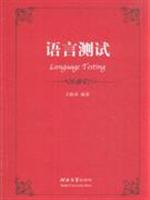
| 《语言测试》的目标读者是外国语言学及应用语言学专业的硕士研究生、英语教师、英语专业的师范生及其他对语言测试感兴趣的人士,力求为初次涉猎语言测试专业领域的目标读者全面介绍语言测试的基本理论概念、实践方法和研究手段。《语言测试》用英语编写的目的是为目标读者阅读语言测试的英语文献打下基础。 |
| 王振亚,1982年毕业于北京航空航天大学外语系英语专业,获文学学士学位,留校任教。1988年毕业于北京航空航天大学研究生硕士学位。1991年毕业于北京大学英语系英语语言文学专业,获文学博士学位。1991年到1999年在北京航空航天大学外语系任教。1993年起享受政府特殊津贴。1997年晋升教授。1999年至今任北京语言大学外语学院英语系教授、博士生导师。2007年获北京市高校教学名师奖。主要研究领域包括语言与文化、语言测试、系统功能语法。 |
| Chapter 1 Fundamentals and types of tests Ⅰ.Fundamentals of tests Ⅱ.Types of tests Chapter 2 The psychometric—structuralist approach to language testing Ⅰ.Introduction Ⅱ.A graphic and verbal presentation of the psychometricstructuralist approach to language testing Ⅲ.Evaluating this approach Chapter 3 The integrative approach t0 language testing Ⅰ.The background Ⅱ.The unitary competence hypothesis Ⅲ.A graphic and verbal presentation of the approach Ⅳ.Cloze tests Ⅴ.Dictation Ⅵ.The evaluation of this approach Chapter 4 Communicative performance testing Ⅰ.The background Ⅱ.Carroll’S model Ⅲ.McNamara’S model Ⅳ.Evaluating communicative performance testing Chapter 5 Bachman’S language testing model Ⅰ.The background Ⅱ.Communicative language ability Ⅲ.Test methods Ⅳ.Comments on Bachman’S model Chapter 6 Testing vocabulary Ⅰ.Some terms Ⅱ.Selection of test words Ⅲ.Item types Ⅳ.Advice on the writing of multiple—choice items Ⅴ.Some new trends in vocabulary testing Chapter 7 Testing grammatical structures Ⅰ.General nature of the ESL structure tests Ⅱ.Determination of test content Ⅲ.Item types Ⅳ.Advice on item writing Chapter 8 Testing listening skills Ⅰ.A general introduction …… Chapter 9 Testing reading comprehension Chapter 10 Testing speaking skills Chapter 11 Testing writing skills Chapter 12 The construction and administration of tests Chapter 13 Interpreting test results Chapter 14 Reliability Chapter 15 Validity Bibliography |



 内容加载中,请稍后...





商品评论(0条)