最 低 价:¥58.80

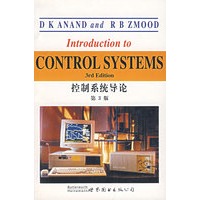
| Dr D. K. Anand is both a Professor and Chairman of the Department of Mechanical Engineering at the University of Maryland, College Park,Maryland, U.S.A. He is a registered Professional Engineer in Maryland and has consulted widely in Systems Analysis for the U.S. Government and Industry. He has served as Senior Staff at the Applied Physics Laboratory of the John Hopkins University and Director of Mechanical Systems at the National Science Foundation. Dr Anand has published over one hundred and fifty papers in technical journals and conference Proceedings and has published two othe books on Introductory Engineering. As well he has a patent on Heat Pipe Control. He is a member of Tau Beta Pi, Pi Tau Sigma, Sigma Xi, and is a Fellow of ASME. |
| 1 Introduction 1.1 Historical Perspective 1.2 Basic Concepts 1.3 Systems Description 1.4 Design, Modeling, and Analysis 1.5 Text Outline 2 Modeling of Physical Systems 2.1 Introduction 2.2 Mechanical Systems 2.3 Electrical Systems 2.4 Electromechanical Systems 2.5 Thermal Systems 2.6 Hydraulic Systems 2.7 System Components 2.8 Summary 2.9 References 2.10 Problems 3 Models for Control Systems 3.1 Introduction 3.2 System Impulse and Step Responses 3.3 The Transfer Function 3.4 Differential Equation Representation 3.5 Block Diagram Analysis 3.6 State Equation Representation 3.7 Relationship Between System Representations 3.8 Small Disturbance of Nonlinear Systems 3.9 Summary 3.10 References 3.11 Problems 4 Time Response - Classical Method 4.1 Introduction 4.2 Transient Response 4.3 Steady State Response 4.4 Response to Periodic Inputs 4.5 Approximate Transient Response 4.6 Summary 4.7 References 4.8 Problems 5 Time Response - State Equation Method 5.1 Introduction 5.2 Solution of the State Equation 5.3 Eigenvalues of Matrix A and Stability 5.4 Two Examples 5.5 Controllability and Observability 5.6 Summary 5.7 References 5.8 Problems 6 Performance Criteria 6.1 Introduction 6.2 Control System Specification 6.3 Dynamic Performance Indices 6.4 Steady State Performance 6.5 Sensitivity Functions and Robustness 6.6 Summary 6.7 References 6.8 Problems 7 Assessing Stability and Performance 7.1 Introduction 7.2 Stability via Routh-Hurwitz Criterion 7.3 Frequency Response Method 7.4 Root Locus Method 7.5 Dynamic Response Performance Measures 7.6 Summary 7.7 References 7.8 Problems 8 Control Strategies and Plant Sizing 9 System Compensation 10 Discrete Time Control Systems 11 Non Linear Control Systems 12 Systems with Stochastic Inputs 13 Adaptive Control Systems A Laplace and Z-Transforms B Symbols,Units and Analogous Systems C Fundamentals of Matrix Theory D Computer Software for Control Index |



 内容加载中,请稍后...



商品评论(0条)