| |
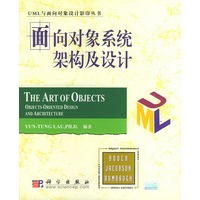
| Preface Chapter 1 Basic Concepts 1.1 The Nature of Objects 1.2 Unified Modeling Language 1.3 UML Notation Basics 1.4 Object Creation and Destruction 1.5 Associations and Links 1.6 Aggregation and Composition 1.7 Servant Classes and Delegation 1.8 Inheritance 1.9 Exercises Chapter 2 Common Patterns in Static Design 2.1 Collection Managers 2.2 Containers 2.3 Self-Containing Classes,Hierarchies,and Networks 2.4 Relationship Loops 2.5 Binary Association Classes 2.6 The Handle-Body Pattern 2.7 Dynamic Schema 2.8 shared Object Pools 2.9 Object Model for Extensible Markup Language 2.10 Case Study:ATM System Software-Part 1 2.11 Case Study:Shared Whiteboard-Part 1 2.12 Case Study:Access Control Lists-Part 1 2.13 Exercises Chapter 3 Persistent Objects 3.1 Transactions and Database Management Systems 3.2 Object-Oriented Database 3.3 Relational Database 3.4 Mapping Persistent Object to Tables 3.5 A Critical Comparison Between Relational and Object-Oriented Database 3.6 Case Study:ATM System Software-Part 2 3.7 Case Study:Shared Whiteboard-Part 2 3.8 Case Study:A Rental Business-Part 1 3.9 Case Study:Access Control Lists-Part 2 3.10 Exercises Chapter 4 4.1 Abstract Classes 4.2 Multiple Inheritance 4.3 Interfaces 4.4 Inner Classes 4.5 Collections 4.6 Packages 4.7 Components 4.8 Nodes 4.9 UML Notation Basics for Dynamic Modeling 4.10 Reverse Engineering and Irreducible Patterns 4.11 Exercises Chapter 5 Dynamic Object Modeling Basics 5.1 Use Case Analyses 5.2 Sequence Diagrams 5.3 The Client/Server Model and Distributed Objects 5.4 Interface Definition and Client/Server 5.5 The CORBA Standard 5.6 Interface Definition Language 5.7 Statechart Diagrams 5.8 Case Study:ATM System Software-Part 3 5.9 Case Study:Shared Whiteboard-Part 3 5.10 Case Study:A Rental Business-Part 2 5.11 Case Study:Access Control Lists-Part 3 5.12 Exercises Chapter 6 Common Interface Design Patterns 6.1 Object Wrappers 6.2 Object adapters 6.3 Object Factories and Managers 6.4 Interfaces as Servant Classes 6.5 Servant Interfaces in Event Processing 6.6 Relationship Loops with Interfaces 6.7 Inheritance Ladders 6.8 CORBA Object 6.9 CORBA Client Stubs 6.10 Tactics in Designing Distributed Object* 6.11 Proxy and Surrogate Objects 6.12 Case Study:ATM System Software-Part 4 6.13 Case Study:Shared Whiteboard-Part 4 6.14 Case Study:Access Control Lists-Part 4 6.15 Exercises Chapter 7 Object-Oriented Architecture 7.1 Notations for Architecture Diagrams 7.2 Procedural Processing Systems 7.3 Client/Server Systems 7.4 Layered Systems 7.5 Three-Tier and Multi-Tier Systems 7.6 Agents 7.7 Aggregations and Federations 7.8 Architectural Patterns in UML* 7.9 Case Study:ATM System Software-Part 5 7.10 Case Study:Shared Whiteboard-Part 5 7.11 Case Study:A Rental Business-Part 3 7.12 Case Study:The Enterprise JavaBeans Framework 7.13 Exercises Chapter 8 Summaries and Notes 8.1 Chapter 1 Summary and Notes 8.2 Chapter 2 Summary and Notes 8.3 Chapter 3 Summary and Notes 8.4 Chapter 4 Summary and Notes 8.5 Chapter 5 Summary and Notes 8.6 Chapter 6 Summary and Notes 8.7 Chapter 7 Summary and Notes 8.8 Case Studies Summary Chapter 9 Answers to Exercises 9.1 Chapter 1 Exercises Answers 9.2 Chapter 2 Exercises Answers 9.3 Chapter 3 Exercises Answers 9.4 Chapter 4 Exercises Answers 9.5 Chapter 5 Exercises Answers 9.6 Chapter 6 Exercises Answers 9.7 Chapter 7 Exercises Answers Appendix A Quick References for Object Designers Appendix B Sample Code Reference List Appendix C Features of Object-Oriented Languages References Index |




 内容加载中,请稍后...




商品评论(0条)