最 低 价:¥1196.52

| 作者简介:Tony Northrup,In the mid 1980s, Tony Northrup, CISSP, MCSE, and MVP,learned to program in BASIC on a ZX-81 personal computer built from a kit. Later, he mastered the 68000 assembly and ANSI C on the Motorola VERSAdos operating system before beginning to write code for MS-DOS. After a brief time with the NEXTSTEP operating system, Tony returned to a Microsoft platform because he was impressed by the beta version of Microsoft Windows NT 3.1. Although he has dabbled in other operating systems, Tony has since focused on Windows development in Microsoft Visual C++, Visual Basic, C#, and Perl (for automation projects). for the .NET Framework. Tony now develops almost exclusively Tony started writing in 1997 and has since published more than a dozen technology books on the topics of development and networking. In addition, Tony has written dozens of articles at http://www.microsoft.com, covering topics ranging from securing ASP.NET applications, to designing firewalls to protect etworks and computers.Tony spends his spare time hiking through the woods near his Phillipston, Massachu-setts home. He's rarely without his camera, and in the past six years has created what might be the largest and most popular publicly accessible database of nature and wildlife photographs on the Internet. Tony lives with his wife Erica and his cat (also his favorite photographic subject) Sammy. |
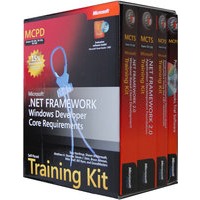
| NET FRAMEWORK2.0Application Development Foundation Introduction Hardware Requirements Software Requirements Using the CD and DVD How to Install the Practice Tests How to Use the Practice Tests How to Uninstall the Practice Tests Microsoft Certified Professional Program. Technical Support Evaluation Edition Software Support 1 Framework Fundamentals Before You Begin Lesson 1: Using Value Types Built-in Value Types How to Declare Value Types How to Create User-Defined Types How to Create Enumerations Lab: Declaring and Using Value Types Lesson Summary Lesson Review Lesson 2: Using Common Reference Types What Is a Reference Type? Comparing the Behavior of Reference and Value Types Built-in Reference Types Strings and String Builders How to Create and Sort Arrays How to Use Streams How to Throw and Catch Exceptions Lab: Working with Reference Types Lesson Summary Lesson Review Lesson 3: Constructing Classes What Is Inheritance? What Is an Interface? What Are Partial Classes? What Are Generics? Events What Are Attributes? What Is Type Forwarding? Lab: Create a Derived Class with Delegates Lesson Summary Lesson Review Lesson 4: Converting Between Types Conversion in Visual Basic and C# What Is Boxing and Unboxing? How to Implement Conversion in Custom Types Lab: Safely Performing Conversions Lesson Summary Lesson Review Chapter Review Chapter Summary Key Terms Case Scenario Case Scenario: Designing an Application Suggested Practices Manage Data in a .NET Framework Application by Using .NET Framework 2.0 System Types Implement .NET Framework Interfaces to Cause Components to Comply with Standard Contracts Control Interactions Between .NET Framework Application Components by Using Events and Delegates Take a Practice Test 2 Input/Output (I/O) Before You Begin Lesson 1: Navigating the File System What Are the File System Classes? The Fi/eSystem/nfo Class The Fi/e/nfo Class How to Get Information about a File How to Copy a File …… 3 Searching, Modifying, and Encoding Text 4 Collections and Generics 5 Serialization 6 Graphics 7 Threading 8 Application Domains and Services 9 Installing and Configuring Applications. 10 Instrumentation 11 Application Security 12 User and Data Security 13 Interoperation 14 Reflection 15 Mail 16 Globalization Practice Tests eBooks Trial software Deisgning and Developing Windows Based Applications Using the NET FRAMEWORk NET FRAMEWORK2.0 Windows-Based Client Development |


 内容加载中,请稍后...


商品评论(0条)