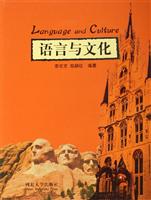
| Chapter One Language and Culture: An Introduction 1 I. Language 1 1. What is language? 2 2. Characteristics of language 2 II. Culture 4 1. What is culture? 4 2. Characteristics of culture 5 3. Relationship between language and culture III. Thought 9 1. What is thought? 9 2. Relationship between language and thought IV. Language, Culture and Thought 11 Words and Expressions 11 Topics for Discussion 13 Chapter Two Word Meaning and Culture 14 I. Word Meaning 14 II. Word Meaning and Culture 16 1. Words with basically the same cultural meanings 16 2. Words with partially equivalent cultural meanings 18 3. Words with greatly different cultural meanings 25 4. Words with completely different cultural meanings 30 5. Words with cultural meanings absent in the other 35 m. Summary 42 Words and Expressions 44 Topics for Discussion 47 Chapter Three Grammar and Culture 50 I. Grammatical Explicitness of English and Grammatical Implicitness of Chinese 50 1. Grammaticalmorphemes 51 2. Subject prominence and topic prominence 57 3. Hypotactic relations vs paratactic relations 61 4. Grammatical explicitness vs grammatical implicitness and culture 62 II. Word Order 63 1. Left branching pattern and right'branching pattern 63 2. Pre-modification and post-modification 65 3. The order of the date, name of the units and the address, etc. 69 4. The order of interrogative sentences 70 5. Word order and culture 72 III. Responses to Negative Questions 74 IV. Tables of Grammatical Terms 76 Words and Expressions 77 Topics for Discussion 77 Chapter Four Text and Culture 79 I . A General Introduction 79 1. What is a text? 79 2. Culture in texts 79 II. Textual Connectives 80 1. Cohesion and coherende; 80 2. Hypotactic and paratactic 84 3. Textual connectives in four main categories of logical relationships' 'between" ad- joining sentences 86 III. Text Structures 91 1. Deductive structure vs inductive Structure 92 2. Linear structure vs circular Structure 96 IV. Styles 100 1. Writing styles 100 2. Speaking styles 102 V. Summary 105 Words and Expressions 106 Topics for Discussion 107 Chapter Five Simile, Metaphor and Culture 108 I. General Remarks 108 II. Cultural-alike Associations 109 III. Cultural Distinct Association 110 IV. Smnmary 115 Words and Expressions 116 Topics for Discussion 116 Chapter Six Cultural Differences in Everyday Conversation 118 I. Vocatives and Culture 118 1. Names 118 2. Standard appellatives 123 II. Greetings and Farewells 123 1. Greetings 123 2. Farewells 124 III. How to Make Introductions 125 IV. Compliments and Responses 126 V. Different Verbal Conventions in Phone Calls 129 VI. Thanks and Replies 130 VII. Apologies and Replies 132 VI. Invitations and Replies 132 IX. Gift.giving and Responses 133 X. Smnmary 134 Words and Expressions 135 Topics for Discussion 136 Chapter Seven Culture and Image Transfer 137 I. Introduction 137 II. Methods of Image Transfer 138 1. Image reproduction 138 2. Image substitution 140 3. Image omission 141 III. Sunmmry 143 Words nnd Exprisions 144 Topics for Discussion 144 Chapter Eight Culture in English Study 145 I ~ The Imemrtsae of Culture Learning in English Study 145 I1. How to Learn Culture During English Study 146 1. To eradicate two false ideas about English study 147 2. To cultivate "cultural creativity" 148 3. How to learn culture in a macroscopic way in English study 150 4. How to learn a culture in a microcosmic way 152 III. Cultural Linguistics 154 Words and Expresions 154 Topics for Discussion 157 Bibliography 158 |



 内容加载中,请稍后...



商品评论(0条)