最 低 价:¥157.50

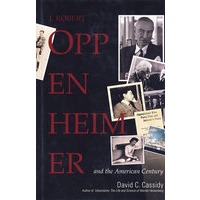
| Dr. David C. Cassidy, is a Professor in the Natural Science Program at Hofstra University, and has been Chair of the Section for History and Philosophy of Science of the New York Academy of Sciences. He served for seven years as Associate Editor of Tbe Collected Papers of Albert Einstein and has been an editorial consultant for the collected works of Heisenberg, Bohr, and Pauli. His book, Uncertainty: The Life and Science of Werner Heisenberg has been widely acclaimed and translated into five foreign languages. He has been awarded the American Institute of Physics Science Writing Award and the Pfizer Award of the History of Science Society. He is also the author of Einstein and Our World and wrote the introduction to Scientists at War: The Farm Hall Transcripts edited by JBernstein. He lives on Long Island in New York. |
| Acknowledgments Introduction 1. Coming to America 2. Ethically Cultured 3. Ethically Schooled 4. The Damning Lie 5. Summa Cum Laude 6. Getting Near the Center 7. A Taste for Physics 8. Coming of Age 9. Professor of Physics 10. Cosmic Connections 11. Depression andWar 12. The Organic Necessity 13. Dropping the Bomb 14. State Scientist 15. Icon of Physics 16. Good Soldiers 17. Insecurity Hearings 18. Exile Aooebdux 1 Aooebdux 2 Aooebdux 3 Aooebdux 4 Notes Bibliography Index |




 内容加载中,请稍后...


商品评论(0条)