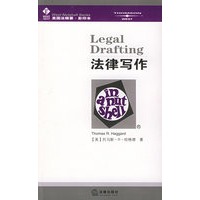
| 在美国法律教育界与律师实务界,这套“美国法精要”(NutshellSehes)是颇具特色的一套丛书。这套书最突出的特点当推它们的简捷明快、深入浅出。众多法学院的学生将这套书作为课外的辅助教材,由此掌握美国各主要部门法的精义。执业律师也经常借助这套书,以迅速了解自己尚未熟习的某些部门法,或者温习过去曾经学过的某些课程。 相信这套丛书也能赢得国内读者的欢迎。无论是法律专业的本科生、研究生,还是执业律师或其他人士,都能从这套丛书中获得有关美国法律的大量知识,对自己的学习和工作有所助益。此外,通过阅读原汁原味的英文来学习美国法律也应能提高读者的法律英语水平,促进与美国同行的直接对话与交流。 ——许传玺:美国哈佛大学法博士(J.D.);耶鲁大学社会文化人类学博士;现任中国政法大学中美法学院院长、教授、博士生导师。 |
| 托马斯·R·哈格德:得克萨斯大学法学院教授,主要研究和教学方向是雇佣和劳工法、雇佣歧视、法律写作、法律起草等。 |
| PREFACE PARTI .INTRODUCTION Chapter 1: A Philosophy of Drafting A .The Characteristics of Good LegalWriting 1.Accuracy 2.Clarity 3.Concision 4.Simplicity 5.Tone B. Three Types of Legal Writing 1.Discoursive Writing 2.Litigation-Related Writing 3.Normative Writing C. The Ultimate Consequence of DraftedDocuments D .Drafting as a Facilitator of Self-Govern-ment and Economic Enterprise E. Drafting as a Form of PreventiveLawyering F. Drafting as an Intellectual Exercise 1.Knowledge of the Law 2.Investigation 3.Conceptualization 4.Prescience 5.Organization G. Drafting as a Literary Exercise 1.Words 2.Sentences 3.Other Word ConstructionTechniques 4.Headings H. Drafting as an Ethical Exercise I. The Costs of Bad Drafting 1.Social Costs 2.Client Costs 3.Drafter Costs J. Drafting From Scratch Chapter 2: Contract Drafting A .The Role of the Contract Drafter B. Recurring Problems in ContractDrafting 1.Unintended Contracts 2.Documents Intended to be Contractshat Fail 3.Contracts Containing Gaps 4.Ambiguous and UnnecessarilyVague Terms 5.Unanticipated Events C. Types of Contracts < D .The Parts of a Contract 1.Caption or Heading 2.Introductory Paragraph 3.Recitals 4.Definitions 5.Substantive Provisions 6.Housekeeping Provisions 7.Signature Blocks 8.Date 9.Notarization 10. An Appendix E. Amending Contracts Chapter 3: Legislative Drafting Chapter 4: The Rules of Interpretation Chapter 5: Drafting Ethics Chapter 6: An Overview PARTⅡ. PREPARATION ANDPLANNING Chapter 7: Getting Started C hapter 8: Drafting Within the Law Chapter 9: Determining Substance Chapter 10: Choosing the Right Concept Chapter 11: Organization PARTⅢ. DRAFTING TECHNIQUES Chapter 12: Avoiding Ambiguities Chapter 13: Drafting Style & Usage Chapter 14: Definitions Chapter 15: Terms Creating LegalConsequences Chapter 16: Document Typography Chapter 17: Reviewing and Revising DraftedDocuments |


 内容加载中,请稍后...







商品评论(0条)