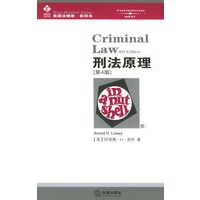
| 在美国法律教育界与律师实务界,“美国法精要”(Nutshell Series)是颇具特色的一套丛书。这套书最突出的特点当推它们的简捷明快、深入浅出。众多法学院的学生将这套书作为课外的辅助教材,由此掌握美国各主要部门法的精义;执业律师也经常借助这套书,以迅速了解自己尚未熟习的某些部门法,或者温习过去曾经学习的某些课程。 相信这套丛书也能赢得国内读者的欢迎。无论是法律专业的本科生、研究生,还是执业律师或其他人士,都能从这套丛书中获得有关美国法律的大量知识,对自己的学习和工作有所助益。此外,通过阅读原汁原味的英文来学习美国法律也应能提高读者的法律英语水平,促进与美国同行的直接对话与交流。 ——许传玺 |
| TABLE OF CASES PART I PUNISHMENT Chapter I Punishment § 1.01 The Distinguishing Feature of the Criminal Law § 1.02 Purposes of Punishment A. Reformation B. Restraint C. Retribution D .Deterrence (1) Individual Deterrence (2) General Deterrence § 1.03 Punishment in Practice (Some Hard Cases) A .Conflicting Purposes B .No Apparent Purpose § 1.04 EqualityAn Unexpressed Theory of Punishment § 1.05 Compensation § 1.06 Judicial Discretion in Sentencing § 1.07 Disproportionality § 1.08 Capital Punishment PARTⅡ SPECIFIC CRIMES Chapter Ⅱ. Homicide § 2.01 Introduction „ § 2.02 Willful, Deliberate, and Premeditated § 2.03 Intent to Cause Serious Bodily Injury § 2.04 Provocation § 2.05 Assisted Suicide § 2.06 Involuntary Manslaughter § 2.07 Reckless Homicide (Negligent Homi cide, Vehicular Homicide) § 2.08 Depraved Heart Murder § 2.09 Felony Murder § 2.10 Misdemeanor Manslaughter Chapter Ⅲ.Causation § 3.01 Introduction § 3.02 Intentional Killings § 3.03 Unintentional Killings § 3.04 Year and a Day Rule Chapter IV. Rape § 4.01 The Traditional View § 4.02 Statutory Changes § 4.03 Rape by Fraud or Coercion § 4.04 Statutory Rape Chapter V. Other Crimes Against the Person § 5.01 Battery § 5.02 Assault § 5.03 Aggravated Assault and Battery § 5.04 Mayhem § 5.05 Kidnapping and Related Offenses Chapter VI. SelfDefense and Related Defenses § 6.01 Introduction § 6.02 In General § 6.03 BatteredSpouse Syndrome § 6.04 RetreatRule § 6.05 Imperfect SelfDefense § 6.06 DefenseofOthers § 6.07 Resisting Unlawful Arrest § 6.08 Apprehension of Criminals § 6.09 Protection of Property and Crime Prevention Chapter VII .Crimes Against Property § 7.01 Introduction § 7.02 The Elements of Larceny A .Introduction B. Trespassory Taking C .Asportation (Carrying Away) D. Valuable Personal Property E .Of Another F .Intent to Permanently Deprive the Person Entitled to Posses sion of That Possession § 7.03 Types of Larceny A. Larceny by Stealth B. Larceny by an Employee (Serv ant) C .Larceny by a Finder D. Larceny by a Bailee E. Larceny by Trick § 7.04 Embezzlement § 7.05 FalsePretenses A. Introduction B. Obtaining Title to Property C. Knowingly or Recklessly Making a False Representation D. Of a Presently Existing Fact E. Of Pecuniary Significance F. Which Is Intended to and Does Defraud the Victim § 7.06 Forgery and Related Offenses § 7.07 Receiving Stolen Goods § 7.08 Robbery § 7.09 Extortion (Blackmail) § 7.10 Consolidation of Theft Offenses § 7.11 Burglary § 7.12 Arson and Related Offenses PART III .INGREDIENTS OF A CRIME Chapter VIII. Mens Rea (Intent) § 8.01 In General § 8.02 Model Penal Code Terminology § 8.03 Transferred Intent § 8.04 Liability Without Fault § 8.05 Limitations on Liability Without Fault A .Constitutional Limitations B .NonConstitutional Limitations § 8.06 MistakeofFact § 8.07 Mistake of Law Chapter IX. ActusReus § 9.01 Introduction § 9.02 Voluntariness § 9.03 Actus Reus as a Constitutional Mini mum § 9.04 Concurrence of Actus Reus and Mens Rea § 9.05 Actus Reus and Strict Liability § 9.06 Omissions PART IV .SPECIAL DEFENSES Chapter X. Insanity § 10.01 Introduction § 10.02 M’Naghten RightWrong Test § 1.003 Irresistible Impulse § 10.04 The Durham Test § 10.05 MPCTest § 10.06 Abolition of the Insanity Defense § 10.07 Disposition of Insane Defendants § 10.08 Interrelationship Between Automa tism and Insanity § 10.09 The Effect of Insanity on the Specific Elements of a Crime § 10.10 Insanity After the Crime Chapter XI. Other Defenses § 11.01 Infancy § 11.02 Intoxication A. Voluntary Intoxication B. Involuntary Intoxication § 11.03 Duress (Coercion) § 11.04 Necessity § 11.05 Entrapment § 11.06 Excessive Government Involvement PARTV .PROOF OF FACTS Chapter XII. Burden of Proof § 12.01 Relevance to Substantive Criminal Law § 12.02 TheGeneralRule § 12.03 What Is A Reasonable Doubt § 12.04 Expansion of Winship (Mullaney v Wilbur) § 12.05 Contraction of the Rule (Patterson v New York) § 12.06 Burden of Proof and Sentencing Chapter XIII. Presumptions and Infer ences § 13.01 Definitions § 13.02 Constitutionality PART VI .INCHOATE AND GROUP CRIMINALITY Chapter XIV. Attempt § 14.01 General Scope and Purpose § 14.02 MensRea § 14.03 Proximity to Completion § 14.04 Abandonment § 14.05 Solicitation VisAVis Attempt § 14.06 Other Preparatory Offenses A. Burglary B. Possession C .Vagrancy § 14.07 AttempttoAttempt § 14.08 Impossibility Chapter XV. Accountability for the Acts of Others § 15.01 Parties to Crime § 15.02 Actus Reus (How Far Must One Go) § 15.03 Mens Rea (Intentional Crimes) § 15.04 Scope of an Aider’ s Liability § 15.05 Mens Rea (Unintentional Crimes) § 15.06 Relationship to Principal’s Liability § 15.07 Special Personal Defenses § 15.08 Abandonment Chapter XVI. Conspiracy § 16.01 Introduction § 16.02 Punishment § 16.03 Basis for Complicity § 16.04 The Object Which Renders a Conspir acy Criminal § 16.05 AgreementThe Actus Reus of Con spiracy § 16.06 Scope of the AgreementOne Con spiracy or Many § 16.07 MensRea § 16.08 Procedural Peculiarities § 16.09 Political Conspiracies and the First Amendment § 16.10 RICO Chapter XVII. Corporate Criminal Lia bility § 17.01 TheoreticalProblems § 17.02 Punishment § 17.03 Whose Conduct Binds a Corporation § 17.04 Statutory Construction Problem § 17.05 The Corporation and Its Alter Egos PART VII. LIMITATIONS OF THE CRIMINAL LAW Chapter XVIII .Limitations of the Crimi nal Law § 18.01 Vagueness § 18.02 ExPostFactoLaws § 18.03 Common Law Crimes § 18.04 Victimless Crimes A. NonConstitutional Limitations B.Constitutional Limitations PERSPECTIVE INDEX |


 内容加载中,请稍后...




商品评论(0条)