最 低 价:¥20.00

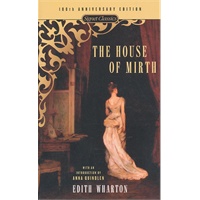
"The heart of the wise is in the house of mourning; but the heart of fools is in the house of mirth," warns Ecclesiastes 7:4, and so does the novel by Edith Wharton that takes its title from this call to heed. New York at the turn of the century was a time of opulence and frivolity for those who could afford it. But for those who couldn't and yet wanted desperately to keep up with the whirlwind, like Wharton's charming Lily Bart, it was something else altogether: a gilded cage rather than the Gilded Age. One of Wharton's earliest descriptions of her heroine, in the library of her bachelor friend and sometime suitor Lawrence Selden, indicates that she appears "as though she were a captured dryad subdued to the conventions of the drawing room." Indeed, herein lies Lily's problem. She has, we're told, "been brought up to be ornamental," and yet her spirit is larger than what this ancillary role requires. By today's standards she would be nothing more than a mild rebel, but in the era into which Wharton drops her unmercifully, this tiny spark of character, combined with numerous assaults by vicious society women and bad luck, ultimately renders Lily persona non grata. Her own ambivalence about her position serves to open the door to disaster: several times she is on the verge of "good" marriage and squanders it at the last moment, unwilling to play by the rules of a society that produces, as she calls them, "poor, miserable, marriageable girls. Lily's rather violent tumble down the social ladder provides a
thumbnail sketch of the general injustices of the upper classes
(which, incidentally, Wharton never quite manages to condemn
entirely, clearly believing that such life is cruel but without
alternative). From her start as a beautiful woman at the height of
her powers to her sad finale as a recently fired milliner's
assistant addicted to sleeping drugs, Lily Bart is heroic, not
least for her final admission of her own role in her downfall.
"Once--twice--you gave me the chance to escape from my life and I
refused it: refused it because I was a coward," she tells Selden as
the book draws to a close. All manner of hideous socialite
beasts--some of whose treatment by Wharton, such as the token
social-climbing Jew, Simon Rosedale, date the book
unfortunately--wander through the novel while Lily plummets. As her
tale winds down to nothing more than the remnants of social grace
and cold hard cash, it's hard not to agree with Lily's own
assessment of herself: "I have tried hard--but life is difficult,
and I am a very useless person. I can hardly be said to have an
independent existence. I was just a screw or a cog in the great
machine I called life, and when I dropped out of it I found I was
of no use anywhere else." Nevertheless, it's even harder not to
believe that she deserved better, which is why The House of
Mirth remains so timely and so vital in spite of its crushing
end and its unflattering portrait of what life offers up.
--Melanie Rehak --This text refers to the Paperback
edition. |
Edith Wharton was born Edith Newbold Jones on January 24, 1862, during the American Civil War. Wharton published her first short story in 1891; her first story collection, The Greater Inclination, in 1899; a novella called The Touchstone in 1900; and her first novel, a historical romance called The Valley of Decision, in 1902. The book that made Wharton famous was The House of Mirth, published in 1905. She died in 1937. --This text refers to the Paperback edition. |




 内容加载中,请稍后...


商品评论(0条)