最 低 价:¥38.40

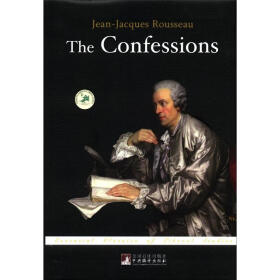
| ROUSSEAU recognized the unique nature of the Confessions, it opens with the famous words:I have resolved on an enterprise which, has noprecectent, and which, once complete, wiu have noimitator. My purpose is to display to my kind a portrait in every way true to nature, and the man Ishall portray will be myself, Some scholars believe that is prediction was wideoff the mark. Not long after publication many otherwriters (such as Goethe, Wordsworth and De Quincey) wrote their own similarly-styled autobiographies. However, Leo Damrosch argues that Rousseau meant that it would be impossible to imitatehis book, as nobody else would be like Jean-Jacques Rousseau. I HAVEENTERED upon a pcrformancc which is without cxamplc, whoscaccomplishmcnt will havc no imitator. I mean to present my fcllow-mortals with a man in all the integrity of nature; and this man shall bemyself. I know my heart, and have studied mankind; I am not made like any one I have been acquainted with, perhaps like no one in existence; if not better,I at least claim originality, and whcthcr Nature did wisely in breaking themould with which she formed me, can only be determined after having readthis work. |
| JEAN-JACQUES ROUSSFAU (1712-1778) was a major philosopher, writer, and composer of 18th-century Romanticism. His political philosophy heavily influenced the French Revolution, as wellas the overall development of modern political, sociological and educational thought. His Confessions, which initiated the modern autobiography, and his Reveries of a Solitary V7alker were among the pre-eminent examples of the late i8th-century movement known as the Age of Sensibility, featuring an increasing focus on subjectivity and introspection that has characterized the modern age. |
| INTRODUCTION BOOK I BOOK II BOOK III BOOK IV BOOK V BOOK VI BOOK VII BOOK VIII BOOK IX BOOK X BOOK XI BOOK XII |



 内容加载中,请稍后...


商品评论(0条)