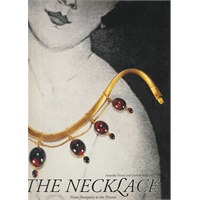
Somewhere between jewelry and bodyadornment, the necklace
offers perhaps the mostexciting decorative possibilities of any
article ofpersonal display. What is worn around the neckcannot be
ignored - unlike the more discreet charms of ear and finger
decoration - and the necklace as an emblem of wealth, status and
proclivity has been shaped and reshaped through the centuries by
successive fashions, techniques and materials, from the Egyptian
broad collar and the Celtic gold torc, to the diamond sautoirs of
the I92OS and the exuberant creations of the liberated
sixties.
The major part of this book is devoted to the necklace in the
19th and 2oth centuries, as these are the most accessible to the
potential buyer and collector. There are, however, substantial
sections on the earlier history of the necklace form: the
figurative pectorals of Egypt, Greek and Roman chains and
medallions, the ornamental inspiration of Renaissance art, the
advent of the pearl necklace in the 17th century.
The I9th century then saw the necklace come into its own. It was
now an essential accoutrement of every well-turned-out woman, even
if the materials of fabrication were sometimes a little
extravagant, such as humming-bird feathers, and tiger claws. This
century ended on one of the highest notes of creativity in jewelry
design: the subtle refinements and innovations of Lalique and his
fellow designers in the curvilinear Art Nouveau style.
The final section on the 2oth century up to our own day reveals
changes in the necklace form in response to rapid shifts in social
and dress fashion Very short or extremely long, precious or
non-precious, wild experiment or traditionally crafted,the necklace
has been an indispensable adjunct of fashion from Edwardian glamour
to the Art Deco twenties, from the New Look to Power Dressing.With
an authoritative text by two of the world's outstanding experts on
the subject, superb illustrations of hundreds of examples, and an
illustrated glossary, this will be a standard work for many years
to come.
|


 内容加载中,请稍后...


商品评论(0条)