网上购物 货比三家
您现在的位置:快乐比价网 > 图书 > 经济管理 > 理财 > 商品详情

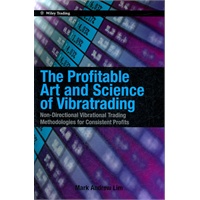
The Profitable Art And Science Of Vibratrading: Non-Directional Vibrational Trading Methodologies For Consistent Profits(ISBN=9780470828748)

分享到:
The Profitable Art And Science Of Vibratrading: Non-Directional Vibrational Trading Methodologies For Consistent Profits(ISBN=9780470828748)

最 低 价:¥300.90

定 价:¥432.00

作 者:MarkAndrew Lim 著

出 版 社:Wiley

出版时间:2012-1-1

I S B N:9780470828748

商品详情

编辑推荐

内容简介

  Author Mark Lim introduces his proprietary Vibratrading system for equity traders and investors
  Vibratrading introduces a new and revolutionary perspective to trading and investing, with a powerful methodology to extract profit in every type of market environment. It is a non-directional methodology that will appeal greatly to the vast amount of directional traders who consistently struggle to keep from losing their trading account. It provides a better and indeed safer way to participate in the markets for consistent profits. You now have the unfair advantage.

作者简介

  Mark Andrew Lim graduated in Special Physics from King’s College London and was subsequently awarded the Bronwen Wood Memorial Prize in Technical Analysis by the Society of Technical Analysis (UK). His trading expertise includes stocks, CFDs, futures and options. Mark conducts a range of technical analysis and proprietary trading master classes covering intermediate to advanced profit extraction methodologies for both directional and non-directional trading.
  Some of Mark’s proprietary trading methods include vibrational, bidirectional, reactional, formational, oscillational, exclusional and transformational. He is a contributing author for The Wiley Trading Guide II and can be reached at www.tradermasterclass.com.

目录

Acknowledgments ix
 Introduction xi
CHAPTER 1 Challenges to Conventional Trading and Investing
 Directional vs. Non-Directional Methodology
 Problem of Maintaining Long-Term Consistent Positive Expectancy
 Predictive vs. Reactive Approaches to Risk in Trading
 Trader Inactivity and Volatile Price Activity
 Subjectivity vs. Objectivity in Trading and Investing
 Filtering and Trade Signals
CHAPTER 2 Understanding the Basics of Order Entry
 Common Trading Terminology and Definitions
 Common Orders
 Entry Orders for Bounded Vibrational Trading
CHAPTER 3 The Objectives of Vibratrading
 Vibratrading as an Income Strategy
 Introduction to the Components of Vibratrading
 Main Components of Vibratrading
 Meaning of the SISO and SOSI Acronyms
 Basic Scaling Entries and Exits
CHAPTER 4 Controlling Risk in Vibratrading
 Types of Risk
 Risk Control Mechanisms
CHAPTER 5 The Mechanics of Equity-Based Price Action
 Equity-Based Calculations
 Market Value vs. Profit Potential
 Price Leverage Ratio (PLR)
 Money Leverage Ratio (MLR)
 Buying Leverage Ratio (BLR)
 Account Leverage Ratio (ALR)
 Calculating the Initial and Current Market Value
CHAPTER 6 The Mechanics of Securitization and Monetization
 Monetizing in Margin and Non-Margin Accounts
 Securitizing Profits and Risk Capital
 The Basic Principles of Price Action
 The Effects of Negative Spread Bias on Reward to Risk Ratio
 Hedged Price Action Principles
CHAPTER 7 The Principles of Boundedness
 Capital Boundedness
 Directional Boundedness
 Range Boundedness
 Order Entry Boundedness
CHAPTER 8 The Mechanics and Dynamics of Vibratrading
 Vibrational Operations, Mechanisms, and Constructs
 The Scale Factor
 Capstone Mechanisms
 The Macrososi Vibrational Mechanism
 Macrosimo Mechanism (Upbuy - Upsell)
CHAPTER 9 Pyramidal-Based Vibrational Mechanisms
 Microsiso
 Interval Slip-Through
 Macrosiso
 Extracting Macrosiso Vibrational Profits
 The ‘‘Arbitrary’’ Vibrational Construct
 Upside Bounded Macrosiso and Microsiso
 Unbounded Upside Macrosiso Mechanism
 Unbounded Hedged Vibrational Constructs
CHAPTER 10 Diversification in Vibratrading
 Bounded Versus Unbounded Zero Test Level Event
 The Six Levels of Diversification
CHAPTER 11 Volatility Matching
 Historical Range Volatility (HRV)
 Event Trading (High Volatility Trading)
 Range Zoning (Medium to Low Volatility Trading)
CHAPTER 12 Putting It All Together, Finally!
 The Return Characteristics of Vibrational Constructs
 A Brief Guide to Understanding the Scale Analysis Tables
 Introduction to Vibradirectional Techniques
 Calculating Working and Running Capital
 within Vibrational Grids
 Free Swing with Constant Capital per Level with Type
 (Roll to Break-Even)
 Gaps in the Grids
 The Balance Between Opportunity Cost and Profitability
 Free Styling across Multiple Levels without Risk Freeing
 Unbounded Bidirectional Profit Capture Constructs
 The "Big Hedge" Technique
 The "Small Hedge"
 The Upside Short Hedge
 Zero Cost Hedging Technique for "Loading the Matrix"
 More Constructs
 Exiting With Profit
CHAPTER 13 The Vibrational Vehicles
 Characteristics of Exchange Traded Funds (ETFs)
 Types of Risk Associated with ETFs
 Funds to Avoid In Vibrational Trading
 The Replicated ETF Portfolio
CHAPTER 14 Comparison with Other Trading Systems
 Vibratrading vs. Scale Trading
 Vibratrading vs. Dollar Cost Averaging
 Vibratrading vs. Value Averaging
 Vibratrading vs. Buy and Hold
 Vibratrading vs. Directional Trading
CHAPTER 15 Profiting from Non-Vibrational Flatline Price Action
 The Basis for Non-Directionality
 Riskless Short Options Trades
 Using Short Options in Vibratrading
CHAPTER 16 Summary of Vibratrading
 The Two Rules of Vibratrading
 A Quick Recap
 Choosing a Vibratrading Construct
 The Importance of a Balanced Pyramidal Structure
 Conclusion
Index

商品评论(0条)

暂无评论!

您的浏览历史

loading 内容加载中,请稍后...