
网上购物 货比三家
您现在的位置:快乐比价网 > 图书 > 教育/科技 > 科学与研究 > 商品详情

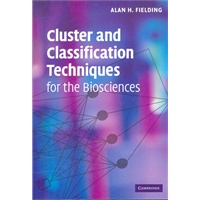
Cluster and Classification Techniques for the Biosciences

分享到:
Cluster and Classification Techniques for the Biosciences

最 低 价:¥446.80

定 价:¥541.60

作 者:本社 编

出 版 社:Cambridge University Press

出版时间:2006-12-1

I S B N:9780521618007

商品详情

编辑推荐

  Recent advances in experimental methods have resulted in the generation of enormous volumes of data across the life sciences. Hence clustering and classification techniques that were once predominantly the domain of ecologists are now being used more widely. This book provides an overview of these important data analysis methods, from long-established statistical methods to more recent machine learning techniques. It aims to provide a framework that will enable the reader to recognise the assumptions and constraints that are implicit in all such techniques. Important generic issues are discussed first and then the major families of algorithms are described. Throughout the focus is on explanation and understanding and readers are directed to other resources that provide additional mathematical rigour when it is required. Examples taken from across the whole of biology, including bioinformatics, are provided throughout the book to illustrate the key concepts and each technique's potential.
  ? Equations are kept to a minimum to ensure accessibility of the material to a wide readership, particularly those without a strong mathematical background ? All worked examples in the book use accessible data files, allowing the reader to understand the details of each analysis and repeat it themselves: examples are taken from across the life sciences. ? A specific chapter is devoted to the measurement of accuracy, something that is lacking in most biological and statistical texts

内容简介

作者简介

目录

Preface page xi
1 Introduction
 1.1?Background
 1.2?Book structure
 1.3?Classification
 1.4?Clustering
 1.5?Structures in data
 1.6?Glossary
 1.7?Recommended reading and other resources
2 Exploratory data analysis
 2.1?Background
 2.2?Dimensionality
 2.3?Goodness of fit testing
 2.4?Graphical methods
 2.5?Variance-based data projections
 2.6?Distance-based data projections
 2.7?Other projection methods
 2.8?Other methods
 2.9?Data dredging
 2.10?Example EDA analysis
3 Cluster analysis
 3.1?Background
 3.2?Distance and similarity measures
 3.3?Partitioning methods
 3.4?Agglomerative hierarchical methods
 3.5?How many groups are there?
 3.6?Divisive hierarchical methods
 3.7?Two-way clustering and gene shaving
 3.8?Recommended reading
 3.9?Example analyses
4 Introduction to classification
 4.1?Background
 4.2?Black-box classifiers
 4.3?Nature of a classifier
 4.4?No-free-lunch
 4.5?Bias and variance
 4.6?Variable (feature) selection
 4.7?Multiple classifiers
 4.8?Why do classifiers fail?
 4.9?Generalisation
 4.10?Types of classifier
5 Classification algorithms 1
 5.1?Background
 5.2?Na?ve Bayes
 5.3?Discriminant analysis
 5.4?Logistic regression
 5.5?Discriminant analysis or logistic regression?
 5.6?Generalised additive models
 5.7?Summary
6 Other classification methods
 6.1?Background
 6.2?Decision trees
 6.3?Support vector machines
 6.4?Artificial neural networks
 6.5?Genetic algorithms
 6.6?Others
 6.7?Where next?
7 Classification accuracy
 7.1?Background
 7.2?Appropriate metrics
 7.3?Binary accuracy measures
 7.4?Appropriate testing data
 7.5?Decision thresholds
 7.6?Example
 7.7?ROC plots
 7.8?Incorporating costs
 7.9?Comparing classifiers
 7.10?Recommended reading
Appendix A
Appendix B
Appendix C
Appendix D
Appendix E
Appendix F
Appendix G
References
Index

商品评论(0条)

暂无评论!

您的浏览历史

loading 内容加载中,请稍后...