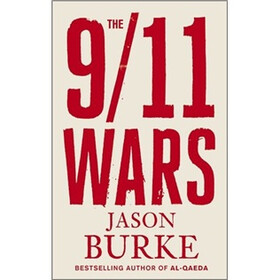
Jason Burke has written an excellent account not of the War on Terror (a preposterous designation) but of the 9/11 wars, the wars mainly fought in Afghanistan, Iraq and Pakistan but by no means confined to these places, wars which in his reckoning have claimed 250,000 lives.
The first part of the book deals with the immediate aftermath of the 9/11 attacks, the attack on Afghanistan and the swift eviction of the Taliban and Al-Qaeda. Part 2 covers the invasion of Iraq and the slide of the country into civil war. Part 3 turns to Europe in 2005-06, with bombs exploding in London and Madrid and Muslim youths rioting in French cities. Part 4 deals with the Iraq insurgency, while Part 5 covers Pakistan and Afghanistan (again). Part 6 concludes with a survey of the principal theatres of the 9/11 wars and what the future might hold. In presenting a vast amount of material, we are not offered a theoretical account of the past decade's events. All the key actors have struggled to stay in control of events which frequently ran out of their attempts to control them. No gruel for the conspiracy theory buffs is on offer here.
In exploring the ebb and flow of events over the last ten years, it is crucial to realise that although the 9/11 wars cannot be considered examples of a clash of civilisations, they were still ideological wars. George Bush Jnr. and Tony Blair defined the issue in Manicheistic terms, every bit as much as their opponents did. The disastrous consequences of this thinking were of course realised in Iraq: Iraqis were glad to see the back of Saddam, but this didn't mean they wanted democracy imposed on them at gunpoint. The occupiers failed to appreciate the depth of wounded pride an occupation would entail. |



 内容加载中,请稍后...


商品评论(0条)