最 低 价:¥33.00

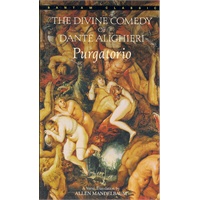
"The English Dante of choice."--Hugh Kenner. "Exactly what we have waited for these years, a Dante with clarity, eloquence, terror, and profoundly moving depths."--Robert Fagles, Princeton University. "Tough and supple, tender and violent . . . vigorous, vernacular . . . Mandelbaum's Dante will stand high among modern translations."--The Christian Science Monitor "Lovers of the English language will be delighted by this eloquently accomplished enterprise." --Book Review Digest |
DANTE ALIGHIERI was born in Florence, Italy in 1265. His early
poetry falls into the tradition of love poetry that passed from the
Provencal to such Italian poets as Guido Cavalcanti, Dante's friend
and mentor. Dante's first major work is the Vita Nuova, 1293-1294.
This sequence of lyrics, sonnets, and prose narrative describes his
love, first earthly, then spiritual, for Beatrice, whom he had
first seen as a child of nine, and who had died when Dante was 25.
Dante married about 1285, served Florence in battle, and rose to a
position of leadership in the bitter factional politics of the
city-state. As one of the city's magistrates, he found it necessary
to banish leaders of the so-called "Black" faction, and his friend
Cavalcanti, who like Dante was a prominent "White." But after the
Blacks seized control of Florence in 1301, Dante himself was tried
in absentia and was banished from the city on pain of death. He
never returned to Florence. We know little about Dante's life in
exile. Legend has it that he studied at Paris, but if so, he
returned to Italy, for his last years were spent in Verona and
Ravenna. In exile he wrote his Convivio, kind of poetic compendium
of medieval philosophy, as well as a political treatise, Monarchia.
He began his Comedy (later to be called the Divine Comedy) around
1307-1308. On a diplomatic mission to Venice in 1321, Dante fell
ill, and returned to Ravenna, where he died. |
Introduction |




 内容加载中,请稍后...


商品评论(0条)