
Charles Dickens was born in a little house in Landport,
Portsea, England, on February 7, 1812. The second of eight
children, he grew up in a family frequently beset by financial
insecurity. At age eleven, Dickens was taken out of school and sent
to work in London backing warehouse, where his job was to paste
labels on bottles for six shillings a week. His father John
Dickens, was a warmhearted but improvident man. When he was
condemned the Marshela Prison for unpaid debts, he unwisely agreed
that Charles should stay in lodgings and continue working while the
rest of the family joined him in jail. This three-month separation
caused Charles much pain; his experiences as a child alone in a
huge city–cold, isolated with barely enough to eat–haunted him for
the rest of his life.
When the family fortunes improved, Charles went back to school,
after which he became an office boy, a freelance reporter and
finally an author. With Pickwick Papers (1836-7) he achieved
immediate fame; in a few years he was easily the post popular and
respected writer of his time. It has been estimated that one out of
every ten persons in Victorian England was a Dickens reader. Oliver
Twist (1837), Nicholas Nickleby (1838-9) and The Old Curiosity Shop
(1840-41) were huge successes. Martin Chuzzlewit (1843-4) was less
so, but Dickens followed it with his unforgettable, A Christmas
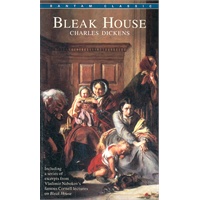
Carol (1843), Bleak House (1852-3), Hard Times (1854) and Little
Dorrit (1855-7) reveal his deepening concern for the injustices of
British Society. A Tale of Two Cities (1859), Great Expectations
(1860-1) and Our Mutual Friend (1864-5) complete his major
works.
Dickens’s marriage to Catherine Hoggarth produced ten children
but ended in separation in 1858. In that year he began a series of
exhausting public readings; his health gradually declined. After
putting in a full day’s work at his home at Gads Hill, Kent on June
8, 1870, Dickens suffered a stroke, and he died the following
day.
|
商品评论(0条)