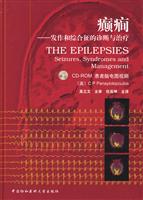
| 作者简介: chrysostomos p. panayiotopoulos md, phd, frcp is an internationally renowned leader and expert in the field of epilepaies. his main contribution is the establishment of the significance of the syndromic diagnosis of epilepsies at a time that epilepsies were inappropriately unified as a single diagnostic category. he is a clinical neurologist and neurophysiologist. hehas worked in greece, uk, australia, saudi arabia and usa. he has been appointed clinical professor of neurology, university of riyadh. the last 20 years he served as a consultand in clinical neurophysiology and epilepsies at st,thomas' hospital in london, uk as well as honorary consultant in paediatric epileptology and honorary senior lecturer at guys, kings and st. thomas'medical school. he has also been an invited professor to harvard university and the university of western australia. he has served as one of the 12 members of the task force on classification and terminlolgy of the international league against epilepsy. he is now consultant emeritus at st. thomas'hospital, london. cp panayiotopoulos has researched prolifieally, investigating the clinical and neruophysiological investigations of muscles, peripheral nerves(he is the first to describe and name f-chronodis persion)and aparticular focus on epilepsies. cp panayiotopoulos has been an active contributor to a number of highly established peer-reviewed journals, he has written over140 articles in journals such as the lancet, brain, neurology, annals of neurology, archives of disease in childhood, journal of neurology, neurosurgery and psychiatry to name but a fow. these papers have been widely cited more than 1000 times in leading journals. he has been the invited author of over 50 chapters in neurology books. he has also sat on the editorial board of epilepsy & behavior, medlink neurology and acted as a reviewer for: brain, lancet, annals of neurology, journal of neurology, neruosurgery and psychiatry, neurology, epilepsia, journal of electroencephalography and clinical neurophysiology. his books on epilepsies are best sellers and have been praised as gems, breath of fresh air and landmarks in the epileptological literature. his work on establishing the syndromic diagnosis of epilepsies and the appropriate video-eeg methodology for their diagnosis, has been regarded as ground breaking adn he is recognised as one the leading authoritises on epilepsies. “panayiotopoulos syndrome”and autonomic statrs epilepticus specific are amongst his main contrbutions. his publications on idiopathic generalised epilepsies and absences have shaped the current thought of their diagnosis and management and he also described and coined the name “phantom absences”as a unique type of epileptic seizures. he is also the first to establish objective differential criteria between visual symptoms of occipital epilepsy and migraine. c p panayiotopoulos is greek, married to thalia valeta, they have two children, paris and sophis, and 4 grand children. |
| Chrysostomos P. Panayiotopoulos MD, PhD, FRCP Chrysostomos P. Panayiotopoulos MD, PhD, FRCP is an interna-tionally renowned leader and expert in the field of epilepsies. His maincontribution is the establishment of the significance of the syndromic diag-nosis of epilepsies at a time that epilepsies were inappropriately unified asa single diagnostic category. He is a clinical neurologist and neurophysiologist. He has worked inGreece, UK, Australia, Saudi Arabia and USA. He has been appointedClinical Professor of Neurology, University of Colorado and Head andProfessor of Neurology, University of Riyadh. The last 20 years he servedas a Consultant in Clinical Neurophysiology and Epilepsies at St.Thomas' Hospital in London, UK as well as Honorary Consultant in Paediatric Epileptology andHonorary Senior Lecturer at Guys, Kings and St. Thomas' Medical school. He has also been an in-vited Professor to Harvard University and the University of Western Australia. He has served as oneof the 12 members of the Task Force on Classification and Terminology of the International LeagueAgainst Epilepsy. He is now Consultant emeritus at St. Thomas' hospital, London. CP Panayiotopoulos has researched prolifically, investigating the clinical and neurophysiologi-cal investigations of muscles, peripheral nerves ( he is the first to describe and name F - chronodis-persion) and a particular focus on epilepsies. CP Panayiotopoulos has been an active contributor to a number of highly established peer - re-viewed journals. He has written over 140 articles in journals such as the Lancet, Brain, Neurolo-gy, Annals of Neurology, Archives of Disease in Childhood, Journal of Neurology, Neurosurgeryand Psychiatry to name but a few. These papers have been widely cited more than 1000 times inleading journals. He has been the invited author of over 50 chapters in neurology books. He has al-so sat on the editorial board of Epilepsy & Behavior, Medlink Neurology and acted as a reviewerfor: Brain, Lancet, Annals of Neurology, Journal of Neurology, Neurosurgery and Psychiatry,Neurology, Epilepsia, Journal of Electroencephalography and Clinical Neurophysiology. His books on epilepsies are best sellers and have been praised as gems, breath of fresh air andlandmarks in the epileptological literature. His work on establishing the syndromic diagnosis of epilepsies and the appropriate video - EEGmethodology for their diagnosis, has been regarded as ground breaking and he is recognised as one the leading authorities on epilepsies. "Panayiotopoulos syndrome" and autonomic status epilepticusspecific are amongst his main contributions. His publications on idiopathic generalised epilepsiesand absences have shaped the current thought of their diagnosis and management and he also de-scribed and coined the name "phantom absences" as a unique type of epileptic seizures. He is alsothe first to establish objective differential criteria between visual symptoms of occipital epilepsy andmigraine. CP Panayiotopoulos is Greek, married to Thalia Valeta, they have two children, Paris andSophia, and 4 grand children. |
| 第一章 癫痫发作和癫痫综合征合征的临床诊断 第一节 发作性事件的鉴别诊断:癫痫发作和非癫痫发作 第二节 癫痫发作及其分类 第三节 癫痫综合征及其分类 第二章 脑电图在癫痫诊断和治疗中的合理应用 第一节 常规头皮发作间歇期和发作期eeg对于癫痫的价值 第二节 eeg结果出现错误的原因 第三节 诱化程序(activating procedures) 第四节 脑电图记录应该针对个体患者的特定情况调整 第五节 脑电图技术员的任务 第六节 数字脑电图 第七节 录像脑电图的常规应用 第八节 脑电图报告应提供临床信息 第九节 首次无热惊厥后脑电图检查的意义 第三章 神经影像学在癫痫诊断和治疗的应用 第一节 对癫痫患者的神经影像学推荐 第二节 临床采用的功能神经影像学检查 第三节 脑磁图 第四章 癫痫的治疗原则 第一节 抗癫痫药物治疗原则 第二节 癫痫的外科治疗 第三节 刺激治疗 第五章 新生儿发作和新生儿期癫痫综合证 第一节 新生儿发作(neonatal seizures) 第二节 新生儿综合证 第三节 新生儿期和婴儿期类似于癫痫发作的非癫痫性运动障碍 第六章 婴儿期的特发性癫痫发作和综合征 第一节 特发性癫痫发作 第二节 特发性癫痫综合征 第七章 婴儿期和儿童早期的癫痫性脑病 第一节 west综合征 第二节 dravet综合征(婴儿期严重肌阵挛癫痫) 第三节 lennox-gastaut综合证 第四节 landau-kleffner综合征(获得性癫痫性失语) 第五节 温波睡眠中持续性棘慢复合波的癫痫 第六节 非进行性脑病中的肌阵挛状态 第七节 儿童不典型良性部分性癫痫 第八节 下丘脑(痴笑性)癫痫 第八章 婴儿和儿童期严重新皮质癫痫综合证(良性儿童发作易感综合征) 第一节 良性儿童癫痫伴中央颞区棘波 第二节 panayiopoulos综合征 第三节 gastaut型特发性儿童枕叶癫痫 第四节 良性儿童发作易感综合征的其他表型 第五节 良性儿童局灶发作的治疗 …… 第十章 特发性合面性癫痫 第十一章 家族性(常染色体显性)局灶性癫痫 第十二章 征状性和很可能为征状性的局灶性癫痫 第十三章 反射性发作和反射性癫痫 第十四章 杭癫痫药物 缩略语 |


 内容加载中,请稍后...




商品评论(0条)