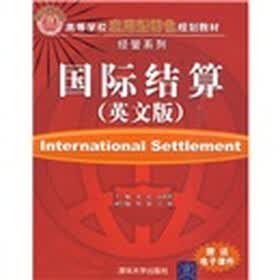
| 《国际结算(英文版)》特色 新颖性:打破常规、体例独特,中英文双语编写,侧重点不同,方便读者理解和迅速掌握要点。 实践性:案例讲解、实战操练等内容的安排。训练了读者运用理论知识分析实际问题的能力,从而提高解决实际问题的能力,增强国际结算的基本技能。 绿合性:百科小知识、知识拓展等专栏融合了我国当前国际结算发展的动态,对前后章节内容、不同学科的知识点进行了综合分析,指出了其联系,旨在培养金融专业读者的融会贯通的能力,增强其跨学科知识的驾驭能力,符合复合型人才发展的需求。 |
| Chapter 1 International Settlement under Globalization 1.1 International Trade and Settlement 1.1.1 International Trade 1.1.2 International Settlement 1.2 International Settlement in New Era 1.2.1 Computerization on Clearing 1.2.2 Innovation on Products 1.2.3 Enhancement on Financial Means 1.2.4 Combination of International Settlement and Lending 1.3 Types of International Methods 1.4 International Customs and Practices 百科小知识:国际结算的产生和 发展 知识拓展:国际结算的分类 知识迁移:人民币贸易结算 实战操练 习题 Chapter 2 International Clearing Systems and SWIFT 2.1 US Dollar Clearing Systems 2.1.1 US Dollar Fund Transfer Payment Methods 2.1.2 Comparison and Fund Transfer Processing 2.2 Selection of Optimal Payment Method 2.2.1 To Pay Parties Located outside the United States 2.2.2 To Pay Parties Located in the United States 2.3 EUR Clearing Systems 2.3.1 Euro 2.3.2 Two Key Clearing Systems: TARGET and Euro 1 2.4 Japanese Yen Clearing Systems 2.5 HKD Clearing System 2.6 SWIFT - A Worldwide Interbank Financial Telecommunication 2.6.1 SWIFT Address/BIC Standard 2.6.2 SWIFT Authentication Key 2.6.3 SWIFT Message Types 百科小知识:支付清算系统 知识拓展:支付清算系统的 基本要素 知识迁移:我国的支付清算系统 实战操练 习题 Chapter 3 Correspondent Banking 3.1 Correspondent Relationship 3.1.1 Sense of Correspondent 3.1.2 Organization Structure of Correspondent in Foreign Banks 3.2 Establishment of Correspondent Relationship 3.3 Selection of Correspondent Accounts 3.3.1 Current Accounts 3.3.2 Investment Accounts and Combined Accounts 3.3.3 Collection Service Accounts 3.4 Establishment of Credit Line for Correspondent 3.4.1 Risk Assessment and Management 3.4.2 The Procedure for Credit Line 3.4.3 Utilization of Credit Line 3.5 Information Collection and Policy Making 3.6 Correspondent Files Management 3.7 Production and Services Promotion 3.8 Development and Cultivation of Correspondent 百科小知识:代理行知多少 知识拓展:为什么要建立代理行 知识迁移:国际结算业务中的 其他银行机构 实战操练 习题 Chapter 4 Instruments 4.1 Overview of Negotiable Instruments 4.1.1 Characteristics 4.1.2 Transfer 4.2 Negotiable Instruments 4.2.1 Bills of Exchange 4.2.2 Promissory Notes and Bankers Drafts 4.2.3 Checks and Travellers Checks 4.3 Credit Cards 百科小知识:票据知多少 知识拓展:票据功能知多少 知识迁移:你了解票据风险吗 实战操练 习题 Chapter 5 Means of International Settlement -Remittance 5.1 Definition 5.2 Means of Remittance 5.2.1 Mail Transfer(M/T) 5.2.2 Demand Drafts (D/D) 5.2.3 Telegraphic Transfer (T/T) 5.2.4 Credit Cards 5.2.5 Travellers Checks 5.2.6 E-banking and Web 5.3 Payment Transaction by T/T 5.3.1 Cover Payment Method 5.3.2 Key Points of Using Cover Method 5.3.3 Serial Payment Method 5.3.4 Key Points of Using Serial Method 5.3.5 Comparison between Cover and Serial Payment Methods 5.4 Guideline to Interbank Compensation 5.4.1 Natures of the Rules 5.4.2 Applications on the Rules 5.4.3 Operation on Claim 5.4.4 Cases on Compensation Claims and Related Errors 百科小知识:提供汇款业务的 各类机构 知识拓展:国际汇款的具体应用 知识迁移:汇款结算方式的风险 与防范 实战操练 习题 Chapter 6 Means of International Settlement -Collection 6.1 Definition 6.2 Parties and Workflow to a Collection 6.3 Documentary Collection 6.4 Uniform Rules for Collections (URC) 6.4.1 Collection Instructions 6.4.2 Legal Position of Banks 6.5 Risk Control in the Documentary Collection 百科小知识:托收及其相关规则 知识拓展:托收当事人之间的 关系 知识迁移:托收结算方式的特点及 风险 实战操练 习题 Chapter 7 Means of International Settlement - Letter of Credit 7.1 Introduction of Letter of Credit 7.1.1 Definition and Workflow 7.1.2 Contractual Arrangement under the Credit 7.1.3 Principles and Characteristics of the Credit 7.1.4 Roles of Credit 7.2 Rights and Liabilities of Parties 7.2.1 Applicants(Importers) 7.2.2 Issuing Banks 7.2.3 Beneficiaries(Exporters) 7.2.4 Advising Banks 7.2.5 Confirming Banks 7.2.6 Negotiating Banks 7.2.7 Paying Banks 7.2.8 Accepting Banks 7.3 Operation on the Letter of Credit 7.3.1 Issuing a Letter of Credit 7.3.2 Utilizing the Credit 百科小知识:信用证及其相关 规则的产生和发展 知识拓展:信用证种类知多少 知识迁移:信用证支付方式的 风险 实战操练 习题 Chapter 8 Guarantees and Standby Letters of Credit 8.1 Bank Guarantees 8.1.1 Definition 8.1.2 Characteristics 8.1.3 Usage 8.2 Types of Bank Guarantee 8.2.1 Tender Guarantees or Bid Bonds 8.2.2 Performance Bonds/ Guarantees 8.2.3 Advance Payment Bonds/Guarantees 8.2.4 Retention Money Guarantees 8.3 Standby Letters of Credit 8.3.1 What Is Standby L/C 8.3.2 Rapid Development for Standby L/C 8.3.3 Structure of Standby L/C 8.3.4 Advantages of Using Standby L/C 百科小知识:备用信用证知多少 知识拓展:备用信用证与银行 保函的比较 知识迁移:备用信用证的风险 实战操练 习题 Chapter 9 Documents Handled in International Settlement 9.1 Presentation of Documents 9.1.1 Latest Date of Presentation 9.1.2 Credit with Dual Mature Dates 9.1.3 Extension of Expiry Date 9.1.4 Risks after Documents Presentation 9.2 Examination of Documents 9.2.1 Key Points for Documents Examination 9.2.2 Discrepancies Handling by Negotiating Bank 9.3 Forwarding of Documents 9.4 Documents to Be Made 9.4.1 Drafts 9.4.2 Commercial Invoices 9.4.3 Transportation Documents 9.4.4 Insurance Documents 9.4.5 Inspection Certificates 9.4.6 Certificates of Origin 9.4.7 Packing Lists 9.4.8 Additional Terms and Conditions 百科小知识:单据的含义及种类 知识拓展:单据的作用 知识迁移:单据的制作原则 及要求 实战操练 习题 Chapter 10 International Trade Finance 10.1 Credit Line Granted by Banks 10.1.1 Credit Line Management 10.1.2 Scope and Utilization of Credit Line 10.2 Facilities on Import Finance 10.2.1 Letter of Credit Issuance 10.2.2 Imported Bill Purchased 10.2.3 Trust Receipt (T/R) 10.2.4 Shipping Guarantee 10.2.5 Receivables and Warehouse Bill as Pledge 10.3 Facilities on Export Finance 10.3.1 Anticipatory Credit 10.3.2 Packing Loan 10.3.3 Export Bill Purchased 10.3.4 Bill Discounted 10.3.5 Factoring 10.3.6 Forfaiting 百科小知识:国际贸易融资的产 生与发展 知识拓展:国际保理业务与 信用证及托收的比较 知识迁移:贸易融资风险及防范 实战操练 习题 Keys |


 内容加载中,请稍后...



商品评论(0条)