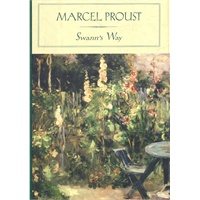
Swann's Way, by Marcel Proust, is part of the Barnes &
Noble Classics series, which offers quality editions at affordable
prices to the student and the general reader, including new
scholarship, thoughtful design, and pages of carefully crafted
extras. Here are some of the remarkable features of Barnes &
Noble Classics:
New introductions commissioned from today's top writers and
scholars
Biographies of the authors
Chronologies of contemporary historical, biographical, and
cultural events
Footnotes and endnotes
Selective discussions of imitations, parodies, poems, books,
plays, paintings, operas, statuary, and films inspired by the
work
Comments by other famous authors
Study questions to challenge the reader's viewpoints and
expectations
Bibliographies for further reading
Indices & Glossaries, when appropriate
All editions are beautifully designed and are printed to superior
specifications; some include illustrations of historical interest.
Barnes & Noble Classics pulls together a constellation of
influences—biographical, historical, and literary—to enrich each
reader's understanding of these enduring works.
Swann’s Way is the first novel of Marcel Proust’s seven-volume
magnum opus ? la rechercheé du temps perdu, or Remembrance of
Things Past. Following Charles Swann’s opening ruminations about
the nature of sleep is one of twentieth-century literature’s most
famous and influential scenes: the eating of the madeleine soaked
in a “decoction of lime-flowers,” the associative act from which
the remainder of the narrative unfurls. After elaborate
reminiscences about Swann’s childhood in Paris and rural Combray,
Proust describes his protagonist’s exploits in nineteenth-century
privileged Parisian society and his obsessive love for young
socialite Odette de Crécy.
Filled with searing, insightful, and humorous criticisms of
French society, this novel showcases Proust’s innovative prose
style, characterized by lengthy, intricate sentences that elongate,
stop, and reverse time. With narration that alternates between
first and third person, Swann’s Way unconventionally introduces
Proust’s recurring themes of memory, love, art, and the human
experience—and for nearly a century readers have deliciously
savored each moment.
Elizabeth Dalton is Professor of English and Comparative
Literature at Barnard College. She has published fiction and
criticism in the New Yorker, Partisan Review, Commentary, and the
New York Times Book Review
|






 内容加载中,请稍后...


商品评论(0条)