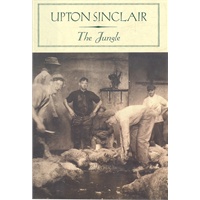
"The Jungle," by Upton Sinclair, is part of the "Barnes and
Noble Classics"" "series, which offers quality editions at
affordable prices to the student and the general reader, including
new scholarship, thoughtful design, and pages of carefully crafted
extras. Here are some of the remarkable features of "Barnes and
Noble Classics": New introductions commissioned from today's top
writers and scholars Biographies of the authors Chronologies of
contemporary historical, biographical, and cultural events
Footnotes and endnotes Selective discussions of imitations,
parodies, poems, books, plays, paintings, operas, statuary, and
films inspired by the work Comments by other famous authors Study
questions to challenge the reader's viewpoints and expectations
Bibliographies for further reading Indices and Glossaries, when
appropriateAll editions are beautifully designed and are printed to
superior specifications; some include illustrations of historical
interest. "Barnes and Noble Classics "pulls together a
constellation of influences-biographical, historical, and
literary-to enrich each reader's understanding of these enduring
works. Upton Sinclair's muckraking masterpiece "The Jungle" centers
on Jurgis Rudkus, a Lithuanian immigrant working in Chicago's
infamous Packingtown. Instead of finding the American Dream, Rudkus
and his family inhabit a brutal, soul-crushing urban jungle
dominated by greedy bosses, pitiless con-men, and corrupt
politicians. While Sinclair's main target was the industry's
appalling labor conditions, the reading public was most outraged by
the disgusting filth and contamination in American food that his
novel exposed. As a result, President Theodore Roosevelt demanded
anofficial investigation, which quickly led to the passage of the
Pure Food and Drug laws. For a work of fiction to have such an
impact outside its literary context is extremely rare. (At the time
of "The Jungle"'s publication in 1906, the only novel to have led
to social change on a similar scale in America was "Uncle Tom's
Cabin,") Today, "The Jungle" remains a relevant portrait of
capitalism at its worst and an impassioned account of the human
spirit facing nearly insurmountable challenges. Maura Spiegel
teaches literature and film at Columbia University and Barnard
College. She is the coauthor of "The Grim Reader and The Breast
Book: An Intimate and Curious History," She coedits "Literature and
Medicine," a journal.
|




 内容加载中,请稍后...


商品评论(0条)