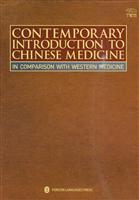
| 《打开中医之门:针对西方读者的中医导论(英文版)(精装)》:An energetic octogenarian of highest professional standards, Professor Xie works ceaselessly and tirelessly to promote academic exchanges and international collaboration in medicine, This book, Contemporary Introduction to Chinese Medicine in Comparison with Western Medicine is one of his recent works in cottaboration with Dr. Xie Fang, The aim of this work is to provide Western practitioners a systematic approach to study, comprehend and practice traditional Chinese medicine. In spite of the vast and attencompassing nature of traditionat Chinese medicine and considerable difficutty in technical, adaptation to Engtish, Professor Xie and Dr. Xie are able, on the first instance, to maintain Chinese cultural characteristics throughout the dissertation, and on the other hand, assume Western readers' perspectives to ensure that the essence of this work is easy to read, study, comprehensive and hence, to apply. This book faithfutty Lays out basic theories of traditional Chinese medicine, and diagnostic and therapeutic principles, with full attention on the treatment of diseases commonly seen in the West, such as allergic, arthritic and gastrointestinal disorders, hypertensive, coronary heart and diabetic diseases, metabolic syndromes and tumors. Ftuent in tanguage and style, it is an extremely handy and practical tool, the best of its kind one can find nowadays.The book elucidates the traditional Chinese medical theories with in-depth analysis of historical and cultural influences and comparison with related western medical theories at philosophical level, to ensure readers to reach profound understandings of Chinese medicine.The book highlights the concepts of diagnostics and treatments of Chinese medicine that are both unique and complimentary to western medicine, with both similarities and differences stressed. Readers can distinguish clearly the methodologies of the two medical systems, dialectic Logic and holistic way of thinking versus formal Logic and analytic one.The book selects to include only those common diseases, the Chinese medical treatment of which shows prominent beneficial effect in comparison with conventional western treatment with evidence of randomized controlled clinical trials. The therapies recommended are all of practical use. Readers can feel the great attractiveness and power of TCM and feel the urgency of further, exploration and integration with western medicine. |
| Dr Xie Zhufan is a professor of both Western and Chinese medicine, Director Emeritus of Institute of Integrated Chinese and Western Medicine at the First Medical School (also the First Hospital), Peking University. He has been engaged in clinical and experimental studies on the integration of the two systems of medicine for nearly fifty years and invited to give lectures in many countries on traditional Chinese medicine and integrated medicine. Since 1985, he has been appointed repeatedly by WHO (World Health Organization) as short-terf consultant or temporary adviser on traditional medicine covering a wid variety of subjects, particularly on the role of traditional medicine in health care, training in traditional medicine, development of research methodology of traditional medicine, standardization of acupuncture nomenclature, and international standard terminologies on traditional medicine in the Western Pacific Region. He has won three national awards, including Scientific and Technological Advancement Award for his systematic research on the basic traditional medical theory in 1992, Science and Technology Award for standardization of traditional Chinese medical terminology in 2005, and Natural Science Award for his work on clinical and experimental studies on anti-senility classical herbal formulas in 2006. Besides a great variety of scientific papers, he has published a number of medical books. The first book in English, Lectures on Traditional Chinese Medicine published by Shen Foundation California, U.S.A. based on the lectures that he gave in San Francisco in 1982 was well received by the readers. Since then, Professor Xie has compiled Dictionary of Traditional Chinese Medicine (1984), Traditional Chinese Internal Medicine (1993), Classified Dictionary of Traditional Chinese Medicine (1994). Best of Traditional Chinese Medicine (1995), and Practical Traditional Chinese Medicine (2000). Traditional Chinese internal Medicine was also translated into German and published in Germany (1996), and Practical Traditional Chinese Medicine translated into Italian and Portuguese, and published in Italy (2007) and Brazil(2008), respectwely. |
| chapter i cultural backgrounds of chinese medicine ancient chinese philosophy i. confucianism ii. daoism ancient chinese language china's scientific tradition chapter ii basic theories of chinese medicine theory of essential qi i. basic concept of qi ii. components of essential qi iii. comparison between qi, pneuma and atom theory of yin-yang i. opposition of yin and yang ii. interdependence of yin and yang iii. inter-consuming-supporting relationship of yin and yang(waxing-waning of yin and yang) iv. inter-transformation of yin and yang v. infinite divisibility of yin and yang theory of five elements i. major contents of five-element theory in chinese medicine ii. comparison between five-element theory in chinese medicine and four-element theory in greek medicine theory of visceral manifestations i. anatomical, physiological and pathological basis of visceral manifestations ii. ancient "black-box" method iii. the five zang-organs iv. the six fu-organs v. the extraordinary organs vi. relations between zang- and zang-organs vii. relations between zang- and fu-organs viii. relations of zang-organs with other tissues and activities ix. ontology of zang-organs according to modern research theory of meridians and collaterals i. historical development of the concept of meridian system ii. evidence indicating the existence of meridians in modern studies iii. composition of the meridian system iv. functions of the meridians cause of disease i. development of etiology of chinese medicine ii. causal factors of external contraction tti. causal factors of internal damage iv. pathogenesis in chinese medicine chapter iii diagnostics symptom, disease and syndrome pattern four examinations i. inspection ii. listening and smelling iii. inquiry iv. palpation syndrome differentiation (pattern identification) i. eight-principle syndrome differentiation ii. disease cause syndrome differentiation iii. qi-blood and body fluid syndrome differentiation iv. visceral syndrome differentiation v. other schemes of syndrome differentiation chapter iv therapeutics principles of treatment i. treating the disease before it arises ii. treating the root vs. treating the tip iii. applying treatment with regard to time, place and individual iv. consistent treatment vs. paradoxical treatment basic knowledge about chinese medicines i. the four natures of medicinals ii. the five tastes (flavors) of medicinals iii. meridian tropism of medicinals iv. principles of composing a compound formula v. medicinal pairing vi. toxicity vii. processing of medicinals methods of treatment i. diaphoresis ii. emesis iii. purgation iv. harmonizing method v. warming method vi. (heat-)clearing method vii. dispersion (or resolution) viii. tonification ix. others chapter v common diseases allergies allergic rhinitis urticaria bronchial asthma cardiovascular diseases essential hypertension coronary heart disease chronic gastro-lntestinal diseases gastro-esophageal reflux and esophagitis functional dyspepsia peptic ulcer disease chornic gastritis inflammatory bowel disease irritable bowel syndrome metabolic disorders diabetes mellitus metabolic syndrome cancers arthritides rheumatoid arthritis gouty arthritis osteoarthritis index acknowledgement |


 内容加载中,请稍后...




商品评论(0条)