导读 F7
Acknowledgements F39
Introduction F40
CHAPTER ONE What is task-based language teaching?
Introduction and overview
Defining 'task'
Broader curricular consideration
Communicative language teaching
Alternative approaches to syllabus design
Experiential learning
Policy and practice
Learner roles
Conclusion
References
CHAPTER TWO A framework for task-based language teaching
Introduction and overview
A task framework
Syllabus design considerations
Developing units of work
Seven principles for task-based language teaching
Conclusion
References
CHAPTER THREE Task components
Introduction and overview
Goals
Input
Procedures
Task types
Teacher and learner roles
Settings
Conclusion
References
CHAPTER FOUR An empirical basis for task-based language teaching
Introduction and overview
Early psycholinguistic models
Interaction, output and the negotiation of meaning
Task difficulty
Conclusion
References
CHAPTER FIVE Focus on form in task-based language teaching
Introduction and overview
Theoretical and empirical issues
Focused versus unfocused tasks
Consciousness-raising tasks
Procedural language
The place of a focus on form in an instructional sequence
Focus on form in the communicative classroom
Conclusion
References
CHAPTER SIX Grading, sequencing and integrating tasks
Introduction and overview
Grading input
Learner factors
Procedural factors
Task continuity
Within-task sequencing: the information gap
Topic-based/theme-based instruction
Content-based instruction
Project-based instruction
Conclusion
References
CHAPTER SEVEN Assessing task-based language teaching
Introduction and overview
Key concepts in assessment
The purposes of assessment
Self-assessment
Techniques for collecting assessment data
Criteria for assessing learner performance
Conclusion
References
CHAPTER EIGHT Tasks and teacher development
Introduction and overview
The self-directed teacher
An in-service workshop
Evaluating tasks
Creating tasks
Conclusion
Postscript
References
Appendix A Approaches and methods - an overview
Appendix B A unit of work based on the six-step procedure presented in Chapter 2
Appendix C A unit of work based on the task/exercise typology in Chapter 5
Appendix D Graded activities for the four macroskills
Appendix E Common reference levels: self-assessment grid
Glossary
Author index
Subject index | 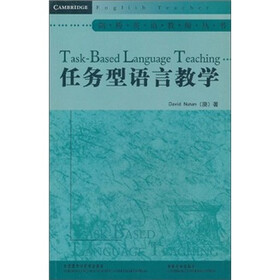


 内容加载中,请稍后...





商品评论(0条)