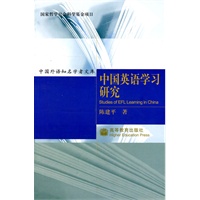
| 陈建平,广东外语外贸大学副校长、博士、教授、博士生导师。1975年毕业于广州外国语学院英语系英语专业;先后获香港中文大学应用语言学哲学硕士学位、英国兰开斯特大学现代社会史硕士学位、北京外国语大学英语语言文学博士学位。 现任学术团体的职务:全国高校外语专业教学指导委员会委员(英语组副组长)、中国英语教学研究会副会长、广东外语学会副会长、中国国际贸易学会国际商务英语研究委员会副主任委员。 陈建平于1991年被国家教委和人事部评为“在工作中做出突出贡献的回国人员”;1993年获广东省省级教学成果二等奖(集体项目);1996年获广东省省级教学成果一等奖(集体项目);1997年获国家级教学成果奖二等奖(集体项目);享受政府特殊津贴(1993)。 陈建平的主要研究方向是社会语言学、英语教学和第二语言习得,主持过多项国家级和省部级科研项目:“八五”国家哲学社会科学基金项目(青年基金):《汉语“主题突出”的特征对中国学生学习英语的影响》;国家哲学社会科学基金项目《英汉语篇模式对比研究》(2003)和教育部人文社会科学研究项目《汉英语言系统的文化差异及其对中国学生学习英语的影响》(2003)。2001至2003年与主持全国8所高校集体合作项目(第二总负责人):教育部“新世纪网络课程建设工程”之《英语专业系列课程》。 |
序言 1 前言 3 Acknowledgements 15 Preface 16 Contents 18 Part Ⅰ: Cross-linguistic Factors of EFL Learning Chapter One Introduction 3 Chapter Two Cultural Understanding of Lexical Items 17 2.1. Context of the problem 17 2.2. Comparison of dictionary entries 18 2.3. An investigation of the cross-cultural understanding of lexical items 20 2.4. Results of the investigation 21 2.5. A discussion of the cultural understanding of lexical items and the implica-tions to ELT 25 Chapter Three Basic Sentence Structure and Thought Patterns 31 3.1. Topic-prominent constructions and EFL learning 31 3.2. Topic prominence in Chinese learners' essay writing 32 3.3. An investigation of Chinese EFL learners' topic-prominent constructions 34 3.3.1. Rationale 3.3.2. Subjects 3.3.3. Test Structures 3.3.4. The Test 3.4. Patterns of Chinese EFL learners' topic-prominent constructions 37 3.4.1. Topic-prominent constructions between groups 3.4.2. Major types of topic-prominent construction between groups 3.5. A discussion of topic-prominent constructions and thought patterns in EFLlearning 43 3.6. Implications for EFL learning 48 Chapter Four Characteristic Paragraph and Essay Structures 51 4.1. Studies of cross-cultural differences in discourse patterns 51 4.2. An analysis of the discourse patterns 51 4.2.1. Essay with deductive structure 4.2.2. Essay with inductive structure 4.2.3. Deductive essay with inductive paragraphs 4.3. Case study of Chinese EFL teachers' structural classification 59 4.4. Distribution pattern of the student's essay structures 60 4.5. Chinese EFL learners' preferred paragraph and essay structures 61 Chapter Five Preferred Patterns of Discourse 65 5.1. Studies in intercultural discourse patterns 65 5.2. An analysis of spoken discourse 65 5.3. An analysis of written discourse 72 5.3.1. Inductive essay 5.3.2. Inductive paragraphs 5.3.3.Topic-prominent sentence structure in discourse 5.4. Exploration of Chinese vs. Western patterns of discourse 78 5.5. Preferred patterns of discourse in the Chinese cultural context 83 Chapter Six Culture and Speech Act Sets 87 6.1. Speech act theory in intercultural communication studies 87 6.2. Speech act theory 87 6.3. The notion of speech act set 90 6.4. Different cultures, different speech act sets 93 6.5. The implication of the notion of speech act sets 98 Part Ⅱ: A Study of Chinese EFL Students' Discourse Patterns- Markedness in Intercultural Discourse Patterns 下篇:中国英语学生语篇模式研究--跨文化语篇模式之标记性 Chapter One Introducing the Study 103 1.1. The context of the study 103 1.2. The need for the study 104 1.3. A summary of the major findings 105 1.4. An outline of Part II 109 Chapter Two A Review of Studies in Intercultural Discourse Studies 111 2.0. Introduction 111 2.1. The relationship between language, culture and cognition 111 2.2. Studies in intercultural discourse: Chinese vs. western discourse patterns 113 2.3. Markedness, cultural schemata and discourse studies 119 2.4. Research methodology 126 2.5. Summary 130 Chapter Three Qualitative and Quantitative Studies 133 3.0. The statement of the problem 133 3.1. The qualitative aspect of the study 133 3.1.1. The data 3.1.2. Analysis of the paragraph structures 3.1.3. Description of the structures of the essays 3.1.4. EFL teachers' classification of the structural types of the essays 3.2. The quantitative aspect of the study: the investigation 149 3.2.1. The hypothesis 3.2.2. Operational definitions 3.2.2.1.The independent variables 3.2.2.2.The dependent variables 3.2.2.3. Definition of terms 3.2.3.The questionnaire 3.2.3.1. Task Ⅰ: Wwhat makes a good essay 3.2.3.2. Task Ⅱ: Evaluation of the students' essays 3.2.3.3. Task Ⅲ: Comparison of different structural types 3.2.4 The pilot study 3.2.5. The informants 3.2.6. Data collecting procedures 3.2.7. Statistical analysis 3.2.7.1. Statistics for task I: What makes a good essay 3.2.7.2. Statistics for task II: Evaluation of the students' essays 3.2.7.3. Statistics for task III: Comparison of different structural types 3.3. The significance of the study 169 Chapter Four The Results: Discourse Patterns and Evaluative Attitudes 171 4.0. Introduction 171 4.1 Results of the qualitative analysis 171 4.2. Results of the quantitative study: The investigation 174 4.2.1. Task Ⅰ: Opinions on what makes a good essay 4.2.1.1. Question 1 :Using conversational style vs. a strictly organized sequence 4.2.1.2. Question 2: Expression of personal feeling vs. direct reasoning 4.2.1.3. Question 3: Reference to other ideas vs. focus on one subject 4.2.1.4. Question 4: Specific to general vs. general to specific 4.2.1.5. Question 5: Examples prior to thesis vs. thesis followed by illustration 4.2.1.6 Summary of task I 4.2.2. Task Ⅱ: Evaluation of the students' essays 4.2.2.1. Evaluation of the essays with inductive structure 4.2.2.2. Evaluation of the essays with inductive paragraph structure 4.2.2.3. Evaluation of the essays with deductive structure 4.2.2.4. Summary of task Ⅱ 4.2.3. Task Ⅲ: Comparison of the preference of different structural types 4.2.3.1. Comparison of the preference of inductive vs. deductive structure 4.2.3.2. Comparison of the preference of inductive paragraph vs. deductive paragraph structure 4.2.3.3. Summary of task Ⅲ 4.3. Summary of the results of the study 197 Chapter Five A Discussion of Markedness in Intercultural Discourse Patterns 201 5.0. Introduction 201 5.1. Interpretation of the results 202 5.1.1. The description of the paragraph and essay structures 5.1.2. Writing in a conversational style vs. in a strictly organized sequence 5.1.3. Expression of personal feelings vs. direct reasoning 5.1.4. Reference to other ideas vs. focus on one subject 5.1.5. Overgeneralization effect in the application of metaknowledge 5.1.6. Impression-evaluation of the student's essays 5.1.7. Preference for the inductive/deductive essay structure 5.2. Discussion on the issue of deductive vs. inductive patterns in intercultural discourse 213 5.2.1. Frequency of occurrence 5.2.2. A Surprise, a break from the communicative norm 5.2.3. Preference in lingnistic production 5.2.4. Markedness 5.2.5. Cultural Schema 5.3. An Explanatory model of markedness for intercultural discourse 223 5.4. Major contributions of the study 225 5.5. Implications of the present study 227 5.6. Limitations of the present study 229 Chapter Six Conclusion: Theory and Practice in Intercultural Discourse Studies 231 6.1. Major findings of the study 231 6.2. Major contribution to the theory and practice in intercultural discourse studies 236 6.3. Suggestions for further research 237 Bibliography 239 Appendixes for Part Ⅰ APPENDIXES for Chapter 3: 255 Appendix Ⅰ. Test Items 255 Appendix Ⅱ. Samples of Chinese EFL Students' Topic Prominent Constructions 256 APPENDIX for Chapter 5: 261 The Original Chinese Text for Mao Zedong's Talk 261 Appendixes for Part Ⅱ Appendix 1.Description of the Structural Types of the Essays 265 Appendix 1.1. Questionnaire: EFL Teacher's Classification of the Structural Types 271 Appendix 1.2. Samples of Essays with Inductive Structures 279 Appendix 1.3. Samples of Essays with Inductive Paragraph Structures 285 Appendix 1.4. Samples of Essays with Deductive Structures 294 Appendix 2. The Questionnaire of the Study Appendix 2.1. Coding of the Data of Task I: Opinions on What Makes a Good Essay 326 Appendix 2.1.1. Statistical Analysis (ANOVA) of the Data: Question 1 Appendix 2.1.2. Statistical Analysis (ANOVA) of the Data: Question 2 Appendix 2.1.3. Statistical Analysis (ANOVA) of the Data: Question 3 Appendix 2.1.4. Statistical Analysis (ANOVA) of the Data: Question 4 Appendix 2.1.5. Statistical Analysis (ANOVA) of the Data: Question 5 Appendix 2.2. Coding of the Data of Task II: Evaluation of the Students' Essays 338 Appendix 2.2.1. Statistical Analysis (Repeated Measures) of the Evaluation of the Essays with Inductive Structure Appendix 2.2.2. Statistical Analysis (Repeated Measures) of the Evaluation of the Essays of Deductive Frame with Inductive Paragraph Structure Appendix 2.2.3. Statistical Analysis (Repeated Measures) of the Evaluation of the Essays with Deductive Structure Appendix 2.3. Coding of the Data of Task III: Comparison of the Preference of Different Structural Types 347 Appendix 2.3.1. Statistical Analysis (Chi-Square Tests) of the Preference of Inductive Structure vs. Deductive Structure Appendix 2.3.2. Statistical Analysis (Chi-Square Tests) of the Preference of Inductive Paragraph Structure vs. Deductive Paragraph Structure |


 内容加载中,请稍后...




商品评论(0条)