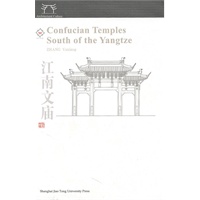
| Born in 1965, Mr. ZHANG Yaxiang graduated from Shandong Institute of Architecture and Engineering in 1988 and got a bachelor's degree in interior design. After graduation, he was engaged in architectural design at Dongying Institute of Architectural Design. In 1998, he graduated from the College of Architecture and Urban Planning, Tongji University, and got a master's degree in architectural history and theory. Now, he is the manager of Shandong Fidelity Construction Planning and Design Company, and a registered architect at the national level. |
| Preface Chapter I : Historical Origins 1. South of the Yangtze 2. Sage Confucius 3. Confucius Temple in Qufu 4. Confucian Temples of South Sect 5. Capital Confucian Temples 6. Local Confucian Temples 7. College Confucian Temples 8. Confiacian Temples South of the Yangtze Chapter II : Shape and Structure of Buildings 1. Shape and Structure of Confucian Temples 2. Shape and Structure of Study Palace 3. Layout of Temple School 4. Symbolic Buildings 5. Geomantic Buildings Chapter III: Decline and Renaissance 1. Taiping Heavenly Kingdom 2. Abolition of Imperial Examination 3. Successive Years of War 4. Reconstruction of Old City 5. Renaissance of Confucianism Chapter IV: Existing Selected Quintessence 1. Confucian Temple in Suzhou 2. Chaotian Palace in Nanjing 3. Confucian Temple in Cicheng County 4. Fuzi (Confucian) Temple in Nanjing 5. Confucian Temple in Jiading 6. Confucian Temple in Shanghai 7. Confucian Temple in Jiangyin 8. Confucian Temple in Chongming 9. Confucian Temple in Chongde 10. Confucian Temple in Wujiang 11. Other Remains Chapter V: Ceremony of Offering Sacrifices to Confucius 1. Historical Origins 2. Sacrificial Utensils and Music Instruments 3. Music and Dance 4. Sacrificial Writing and Carol 5. Ritual for Sacrifices 6. Offering Sacrifices to Confucius in Modem Times Bibliography |
 内容加载中,请稍后...




商品评论(0条)