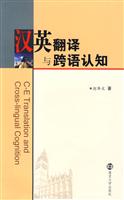
| 刘华文,1968年3月出生,山东嘉祥人。南京大学外国语学院副教授、翻译学博士、硕士生导师,江苏省翻译协会理事。专著有《汉诗英译的主体审美论》,在Meta、《中国翻译》、《中国外语》、《翻译学报》等学术期刊上发表论文二十余篇,译著多部,曾任《新时代英汉大词典》编委。研究方向有认知与翻译、基于翻译的英汉对比语言学、翻译的语言哲学研究、诗歌翻译、双语词典学等。 |
| 1 introduction: co-refererice, inter-structure and re-conceptualization in c-e translation 1.1 introduction 1.2 the co-referential relation in c-e translation 1.3 inter-structural relations between sl and tl 1.4 conceptual relations between sl and tl 1.5 conclusion 2 cognitive abilities in c-e translation 2.1 introduction 2.2 images-raw materials for cognitive event in translation 2.3 cognitive abilities in c-e translation 2.3.1 recuperation of scene 2.3.2 selective readjustment 2.3.3 perspective shifts 2.3.4 abstraction 2.4 summary: iconicity as the principle of mechanism for cognitive abilities 3 cognitive characteristics of re-categorization in c-e translation 3.1 re-categorization: a cognitive mechanism in translation 3.2 the cognitive characteristics of re-categorization in c-e translation 3.2.1 the confinedness in re-categorization 3.2.2 the split-levelness in re-categorization 3.2.3 the parasiticness of re-categorization 3.2.4 the bi-directionalness in re-categorization 3.3 conclusion: translational cognitive re-categorization in the light of linguistic philosophy 4 semantic construction through space blending in c-e translation 4.1 introduction 4.2 space blending: a theoretical account 4.2.1 space blending theory 4.2.2 cold dish or cold plate? 4.3 frame, domain, space, script: parameters in cross-lingual space blending 4.3.1 frame: a parameter pertaining to the spatial proximity within a scene 4.3.2 domain: a parameter pertaining to the total knowledge involved and the interrelatedness of its constituents 4.3.3 script: a parameter pertaining to a temporally sequenced space 4.3.4 ease: a parameter against which a constituent in a frame, domain or script is profiled 4.4 conclusion 5 two levels of cross-lingual metonymic substitution in c-e translation 5.1 metonymy in cognitive perspective 5.2 types of metonymy 5.3 metaphor-metonymy relationship 5.4 metonymie approaches to c-e translation 5.4.1 low-level metonymy 5.4.2 high-level metonymy 5.4.3 metaphtonymy 5.5 conclusion 6 re-lexicalization of motion-event in c-e translation …… 7 re-matching of verb with construction in c-e translation 8 inter-constructional correlations ing c-e translation 9 fictivity and factivity of event re-conceptualization in c-e translation 10 semantic orientation,syntactic position and pragmatic function of modifier in c-e translation references subject index chinese postscript |


 内容加载中,请稍后...







商品评论(0条)