This is an excellent, easy-to-understand and well-written exposition of the benefits of financial globalization, persuasively setting out the case for financial liberalization in developing countries--against the tidal wave of much current academic thinking on the matter. -- Nigel Grimwade, Times Higher Education Supplement
Frederic Mishkin . . . argues in an important new book, foreign capital can bring big gains at the microeconomic level: more competition, new technology and modern managerial know-how. Inflows of foreign direct investment into the financial system itself are particularly valuable to an emerging country. -- Financial Times
Frederic S. Mishkin . . . argues that when handled with proper safeguards, financial openness can confer many benefits that are often overlooked, like reducing corruption and busting up local monopolies and business oligarchies. -- Paul Blustein, Washington Post
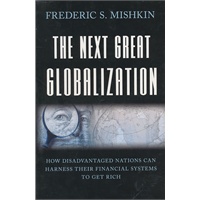
The next great globalization, according to Frederic Mishkin's new book . . . will be financial in character: the flow of foreign money into stocks, bonds and banking in emerging economies. . . . Mr. Mishkin makes a clear and compact case for cosmopolitan capital; and his footnotes . . . weigh and tally a wealth of economic research. -- The Economist
In this economic equivalent of tough love, Mishkin seldom uses a qualifying phrase. The premise is crystal clear: choose the path of globalization that leads to economic development, higher income levels, and general prosperity, or choose the path of globalization that leads to stagnation, stasis, and lower living standards. . . . Advocates of free trade will nod their heads in agreement, and opponents will find plenty of food for thought. -- Choice
The Next Great Globalization is a compelling read for anyone with an interest in the real-life complexities of economic development, and its focus on the often overlooked or maligned role of financial institutions is very welcome. -- Diane Coyle, International Affairs
Offers a plan for reform of developing nations' banking systems. . . . Valuable--and achievable--recommendations for change. . . . The Next Great Globalization describes the failings of the International Monetary Fund well, in part a result of Mishkin's experience as an outside evaluator of the organization. -- BusinessWee
This book addresses an important global problem: the low state of development experienced by much of the world's population, and it makes a valuable contribution to the development literature by focusing on domestic institutions. Moreover, while most economic discussion about institutions is highly abst, Mishkin focuses on financial institutions. -- Eva Marikova Leeds, Eastern Economic Journal
This book by a prominent economist and Fed Governor provides invaluable insights into the financial development process, drawing on theoretical research and country experiences to distill the lessons for policymakers. It explains how globalization--both real and financial--can bring prosperity, stability, and wealth to emerging market countries that put in place the necessary institutional reforms when liberalizing their financial systems. The Next Great Globalization is intended not just for economists but also for broader audiences with an interest in financial issues. -- Miranda Xafa, World Economi
This is a workmanlike book written in plain English about an important but currently controversial subject: financial globalization. Its judgements are, by and large, sound. . . . [I]t is . . . worthwhile to have the traditional virtues of financial globalization set out simply and clearly. -- Deepak Lal, International History Review
This book's arguments are backed by sound economic research, and there are important policy lessons to be learned. The material will be valuable for economists and policymakers across the world, but particularly to those working in developing countries and at international financial institutions. -- Jose R. Sanchez-Fung, Economic Change and Restructuring |





 内容加载中,请稍后...


商品评论(0条)