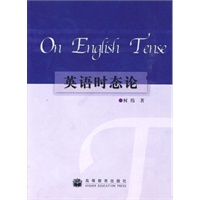
| 序(一) 序(二) Acknowledgements Synopsis 内容简介 List of Figures List of Tables Notational Conventions Abbreviations 1 Introduction 1.1 Background to the Study 1.2 Why the Tense Relationships in "Finite Hypotactic Clause Complexes" ? 1.3 Aim of the Study and Research Questions 1.4 Data Collection 1.5 Structure of the Book 2 Understandings of English Tense 2.1 Introduction 2.2 Central Positions on Tense in Independent Clauses 2.2.1 Logical Thinkings 2.2.1.1 Logic and Tense 2.2.1.2 The Notion of Tense 2.2.2 Linguistic Perceptions 2.2.2.1 Classical Tense Grammar 2.2.2.2 The Earlier Traditional Model of English Tense 2.2.2.3 The Reduced Model 2.2.2.4 The New Wrapping-up Version 2.2.2.5 The Slightly Expanded Model 2.2.2.6 The Greatly Expanded Version 2.2.3 The Notion of Tense Revisited in This Study 2.3 Competing Views on Tense in Finite Hypotactic Clause Complexes 2.3.1 The Formal Sequence of Tenses Hypothesis 2.3.2 The Absolute Deixis Hypothesis 2.3.3 The Relative Time Hypothesis 2.3.4 The Relative or Absolute Time Hypothesis 2.3.5 The Assumption Within Systemic Functional Grammar 2.4 Summary 3 Clarifying the Definition of Tense 3.1 Introduction 3.2 "Event" or "Event" ? 3.3 Reconsideration of the Basic Principles 3.4 Reexamination of the Deictic Feature of Tense 3.5 Reclassification of Tenses 3.5.1 Primary Tenses 3.5.2 Secondary Tenses 3.5.3 Primary-secondary Tenses 3.5.4 Secondary-secondary Tenses 3.6 Tense as a Grammatical Resource for Expressing Time 3.7 Summary 4 Uplifting Tense to the Clause Rank 4.1 Introduction 4.2 Different Versions of the Rank Scale Hypothesis 4.2.1 The Strong Version 4.2.2 The Rank Scale Debate 4.2.3 The Weak Version 4.3 Tense at the Group Rank 4.3.1 Problems with the Notion of the "Verbal Group" 4.3.2 Inconsistencies in the Treatment of the "Finite" and the "Auxiliaries" 4.3.3 Inadequacies in the Treatment of Phrasal Verbs 4.4 Tense at the Clause Rank 4.4.1 The Manipulation of Tense at the Clattse Rank 4.4.2 The Replacement of the "Finite" by the Finite Functional Operator 4.4.3 The Categorization of the Auxiliary Group 4.4.4 The Categorization of the Verbal Group 4.5 Summary 5 Temporal Dependence 5.1 Introduction 5.2 Preliminaries 5.2.1 Temporal vs. Logico-semantic Interdependence 5.2.2 The Reference Time Modifying Rule 5.2.3 Two Kinds of Dependence 5.3 The Expressions of the Relationships Between Tenses 5.3.1 The Tense Referring to a Past Time 5.3.1.1 Anteriority 5.3.1.2 Simultaneity 5.3.1.3 Posteriority 5.3.2 The Tense Referring to a Present Time 5.3.3 The Tense Referring to a Future Time 5.3.3.1 Anteriority 5.3.3.2 Simultaneity 5.3.3.3 Posteriority 5.4 Strict and Non-strict Simultaneity 5.5 Direct and Indirect Domination 5.6 Recursion 5.7 The Interpretation of Temporal Relations Between Event Times 5.8 Summary 6 Temporal Independence 6.1 Introduction 6.2 The Reference Time Shifting Rule 6.3 The Motivations for the Application of the Shifting Rule 6.3.1 Restricted by the Present Time 6.3.2 Triggered by Temporal Circumstantial Elements 6.3.3 Triggered by Temporal Conjunctions 6.3.4 Resulting from Context of Culture 6.3.5 Restricted by the Types of Clause Complexes 6.3.5.1 Hypotactic Clause Complexes in Expansion 6.3.5.1.1 Complexes with Elaborating Clauses 6.3.5.1.2 Complexes with Extending Clauses 6.3.5.1.3 Complexes with Enhancing Clauses 6.3.5.2 Hypotactic Clause Complexes in Projection 6.4 The Interpretation of Temporal Relations Between Event …… 7 Implications and Applications 8 Conclusions |


 内容加载中,请稍后...







商品评论(0条)