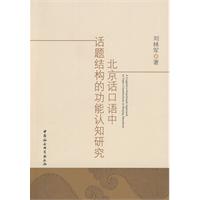
| 刘林军,1970年生。 北京语言大学外国语学院副教授、硕士生导师,主要从事语言学与翻译学的研究。已有译著及多篇学术论文发表。 |
| list of abbreviations list of tables list of figures chapter 1 introduction 1.1 the issue 1.2 cognitive linguistics as an alternative 1.3 a corpus approach 1.4 monograph chapters chapter 2 review of previous studies on mandarin topics and the cognitive approach as an alternative 2.1 findings on and controversies over topic 2.2 a cognitive approach to topic 2.3 findings in other topic-prominent languages chapter 3 pauses and pause particles as topic markers in mandarin 3.1 pauses as topic markers 3.2 pause particles as topic markers 3.3 discourse use of pause particles in beijing mandarin chapter 4 methodology of a corpus study 4.1 a coding property based approach to topic identification 4.2 defining some grammatical terms 4.3 data: the beijing corpus 4.4 corpus analysis procedure 4.5 research goals chapter 5 pausing and topic marking 5.1 pausing in nominal constructions 5.2 pausing in double-subject constructions 5.3 pausing in top-subject constructions 5.4 summary chapter 6 high frequency topic markers in beijing mandarin 6.1 pause particle ne 6.2 pause particle ba 6.3 pause particle a and its phonetic variants 6.4 pause particle ma 6.5 lexical topic marker dehua ' if' and laijiang ' speaking of' 6.6 discussion 6.7 summary chapter 7 a unified interpretation of topic as conceptual reference point 7.1 reference points are more than entities 7.2 reference points can be multiple 7.3 schematizing topic-comment constructions 7.4 summary chapter 8 conclusion 8.1 a brief review 8.2 revisiting the controversies over mandarin topics 8.3 reference point as a conceptual archetype 8.4 areas of further study appendix : characteristics of monologues comprising the corpus references |


 内容加载中,请稍后...







商品评论(0条)