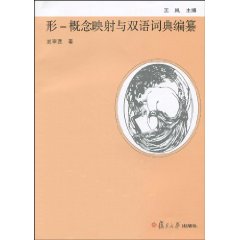
| 序言前言AbbreviationsIntroductionChapter I Implications of a Developmental Model of Polysemous Representation for Polysemous Entry Treatment0.Introduction: the dictionary and the mind1.Polysemy2.Sense ordering3.Competing views about polysemous representation4.A developmental model of polysemous representation5.Implications for polysemous entry and homonym treatment in the dictionary6.ConclusionChapter II Conceptual Representation for Words in a Second Language0.Introduction1.The word association model2.The concept mediation model3.The mixed model4.The revised hierarchical model5.The distributed feature model6.ConclusionChapter III Constructing Models of the Definition and Its Counterpart (Equivalent or Translation) in the Bilingualized Dictionary0.Introduction1.Treatment of equivalents2.Treatment of culturebound words3.Treatment of partial equivalents4.ConclusionChapter IV Why the Bilingualized? - A Discussion Based on the Analysis of the EFL Learners Mental Representation of Conscience and Liangxin (良心)0.Introduction1.The L2 learners mental representation of abstract concepts and chunks2.The case of conscience3.Treatment of the definition4.Treatment of the example5.ConclusionChapter V New Trends in Bilingual Dictionary Compilation: On the Compilation of the Oxford Chinese Dictionary0.Introduction1.A conceptual framework2.Lexicalization: neologism and compounds3.Lexical units: phrasal verbs and typical expressions4.Dictionary Production System (hereafter DPS): online dictionary compilation5.ConclusionChapter VI FormConcept Mapping and the Organization of Semantic and Contextual Information in the Greater China ChineseEnglish Dictionary: A Case Study0.Introduction1.Traditional presentation of the dictionary entry2.Organizing meanings3.Psychological coherence4.Combination of approaches to ordering meanings:the GCCE practice5.Contextual information6.Conclusion: lexicography, semantics, and the mental lexiconChapter VII SummaryBibliography |

 内容加载中,请稍后...






商品评论(0条)