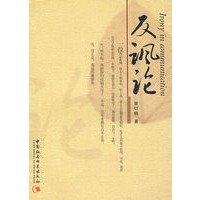
| 曾衍桃,1964年11月出生,男,汉族,祖籍江西吉安遂川。教授、博士,伦敦大学博士后。现任广东商学院学术委员会委员、硕士研究生导师、外事处副处长,兼任中国语用学会理事、广东外语外贸大学外国语言学及应用语言学研究中心特约研究员和商务英语学院硕士研究生导师、Journal of Pragmatics和《现代外语》特邀评审员。 1985年毕业于江西大学(现南昌大学)英语语言文学专业,获得学士学位;1991年毕业于杭州大学(现浙江大学)英语语言文学专业,获是硕士学位;1998年毕业于广东外语外贸大学语言学及应用语言学专业,获得博士学位;2002-2003年,在英国伦敦大学留学兼博士后研究。 他对当代语用学,尤其是对认知语用学和语用修辞进行了较为深入的研究,先后在《外语教学与研究》等刊物发表系列学术论文30余篇,出版专著1部、参编3部、译著1部。代表性论文有《短路会话隐含》等。主持或合作参与广东省人文社科研究项目“广东社会语用问题研究”等省部级项目6项,独立承担教育部留学基金委资助项目和广东省“千百十”工程研究项目各1项,主持校级研究项目2项。2004年被确定为广东省“千百十”工程培养对象。获得教学优秀奖、优秀教师、光华全项奖等荣誉或称号。 |
| 前言 Foreword & Acknowledgement in English Flowchart of Irony Recognition Abbreviations Chapter One A general description of irony 1.1 My understanding of irony 1.2 Pragmatic classification of irony 1.3 Pragma- linguistic forms to realize irony 1.4 Pragmatic strategies in ironic communication 1.5 Pragmatic forces of irony 1.5.1 Making criticism 1.5.2 Showing power 1.5.3 Saving face 1.5.4 Amusing 1.6 General framework of the study: scope, methodology and objectives 1.7 The use of the terms "speaker/hearer" and other Synonymous terms Chapter two Previous accounts of irony: A review 2.1 Traditional semantic definition of irony 2.2 Logical refinement of irony definition 2.3 Grice's pragmatic refinement of irony description 2.4 Post - Gricean refinement of irony description 2.4.1 The echoic mention theory of irony 2.4.2 The pretense theory of irony 2.4.3 Resemblances and differences between the mention and pretense theories 2.5 Concluding remarks on the previous accounts of irony Chapter Three Properties of ironic utterance 3.1 Properties embedded in ironic utterance 3.1.1 Indeterminacy and vagueness of ironical implications 3.1.2 Plurality of ironic interpretation 3.1.3 Extendibility of ironical implication 3.2 Pragma - psychological properties of ironic communication 3.2.1 Pragma- psychological context constituting irony 3.2.2 Pragma - psychological implication of an ironist' s utterance Chapter Four Mutuality: the precondition for ironic communication and cognition 4.1 Elements constituting mutuality 4.2 Necessity of mutuality in ironic communication 4.3 Possibility of establishing mutuality in ironic communication 4.3.1 Cues indicating mutuality 4.3.2 Mutuality decision criterion in ironic communication 4.4 Summary of Chapters Three and Four Chapter Five Perception of counter - expectational mismatch as irony triggering 5.1 The echoism hypothesis——irony as echoic interpretation 5.2 The pretense hypothesis——irony as pretense 5.3 An alternative hypothesis——irony as counter-expectationalmismatch Chapter Six Irony: Misapplication of a critical evaluation 6.1 Irony as a critical evaluation 6.2 Irony as misapplication of a critical evaluation 6.3 Summary of Part Three (Chapters Five and Six) Chapter Seven Irony cognition and its principle 7.1 The principle of irony cognition 7.2 Recognition of ironic implicatures 7.3 Recognition of ironic impression and attitude 7.4 A brief summary of Chapter Seven Chapter Eight Irony understanding: Looking back and forward Notes Appendix Bibliography |

 内容加载中,请稍后...




商品评论(0条)