
最 低 价:¥32.20

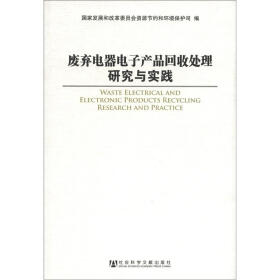
| 影印版序 由于计算方法的深入发展和过去几十年中高速计算机的出现和普及,随着物理学基础理论的进一步突破,物理学家们逐步可以应用一些更严格和更全面的复杂模型,来定量研究实际的复杂体系的物理性质。基于物理学基本原理的数值计算和模拟已经成为将理论物理和实验物理紧密联系在一起的一座重要桥梁:它不仅能够弥补简单的解析理论模型难以完全描述复杂物理现象的不足,而且可以克服实验物理中遇到的许多困难,例如直接模拟实验上不能实现或技术条件要求很高、实验代价昂贵的物理系统等。计算机模拟技术已经渗透到物理学的各个领域,包括凝聚态物理、核物理、粒子物理、天体物理等,导致了计算物理这一新学科的突破性发展和成熟。从20世纪40年代开始,计算物理学家们已经发展了大量新数值方法(如Monte Carlo方法、分子动力学方法、快速Fourier变换等),由此发现了很多未曾预料到的新现象,并给理论和实验物理学提出了许多新问题。总之,计算物理已成为物理学家揭示多层次复杂体系的物理规律的重要手段,同时也广泛应用于处理实验结果和提出物理解释。对一个成功的物理学家来说,掌握必要的计算物理学知识和手段已变得越来越重要。越来越多的大学已针对将要从事物理学及相关学科研究的研究生和本科生开设了计算物理课程。 过去的十年中国际上已涌现出一些很好的计算物理专著和教材。由Purdue大学物理系的Nicholas Giordano教授和Hisao Nakanishi教授在其多年计算物理教学和科研工作基础上合作撰写的Computational Physics(Second Edition)一书就是其中的突出代表。该书紧扣一些非常基本但难以解析求解的物理问题逐步展开,围绕各个物理学专题介绍了物理学研究中各种基本的计算机数值模拟方法,深入浅出地讨论其理论基础和实际应用,着重于解决实际物理问题的基本数值方法。这样可以使读者通过学习,对物理学中应用的主要计算技术有一个全面的了解,从而具有利用计算机进行数值计算解决复杂体系物理问题的能力。该书的另一个特点是包含了很多的物理学专题,这使得该书作为教材使用时教师在教学内容及其深度的选择方面有较大的灵活性。 清华大学出版社将该书引入国内,无疑将有利于从事物理科学及其相关研究的科研工作者和学生掌握必要的计算物理学方法和手段,并促进计算物理学科的的发展。 |
| preface about the authors 1 a first numerical problem 1.1 radioactive decay 1.2 a numerical approach 1.3 design and construction of a working program:codes and pse docodes 1.4 testing your program 1.5 numerical considerations 1.6 programming guidelines and philosophy 2 realistic projectile motion 2.1 bicycle racing:the effect of air resistance 2.2 projectile motion:the trajectory of a cannon shell 2.3 baseball:motion of a batted ball 2.4 throwing a baseball:the effects of spin 2.5 golf 3 oscillatory motion and chaos 3.1 simple harmonic motion 3.2 making the pendulum more interesting:adding dissipation, nonlinearity, and a driving force 3.3 chaos in the driven nonlinear pendulum 3.4 routes to chaos:period doubling . 3.5 the logistic map:why the period doubles 3.6 the lorenz model 3.7 the billiard problem 3.8 behavior in the frequency domain:chaos and noise 4 the solar system 4.1 kepler's laws 4.2 the inverse-square law and the stability of planetary orbits 4.3 precession of the perihelion of mercury 4.4 the three-body problem and the effect of jupiter on earth 4.5 resonances in the solar system:kirkwood gaps and planetary rings 4.6 chaotic tumbling of hyperion 5 potentials and fields 5.1 electric potentials and fields:laplace's equation 5.2 potentials and fields near electric charges 5.3 magnetic field produced by a current 5.4 magnetic field of a solenoid:inside and out 6 waves 6.1 waves:the ideal case 6.2 frequency spectrum of waves on a string 6.3 motion of a(somewhat)realistic string 6.4 waves on a string(again):spectral methods 7 random systems 7.1 why perform simulations of random processes? 7.2 random walks 7.3 self-avoiding walks 7.4 random walks and diffusion 7.5 diffusion, entropy, and the arrow of time 7.6 cluster growth models 7.7 fractal dimensionalities of curves 7.8 percolation 7.9 diffusion on fractals 8 statistical mechanics, phase transitions, and the ising model 8.1 the ising model and statistical mechanics 8.2 mean field theory 8.3 the monte carlo method 8.4 the ising model and second-order phase transitions 8.5 first-order phase transitions 8.6 scaling 9 molecular dynamics 9.1 introduction to the method:properties of a dilute gas 9.2 the melting transition 9.3 equipartition and the fermi-pasta-ulam problem 10 quantum mechanics 10.1 time-independent schrsdinger equation:some preliminaries 10.2 one dimension:shooting and matching methods 10.3 a matrix approach 10.4 a variational approach 10.5 time-dependent schr6dinger equation:direct solutions 10.6 time-dependent schr6dinger equation in two dimensions 10.7 spectral methods 11 vibrations,waves,and the physics of musical instruments 12 interdisciplinary topics appendices a ordinary differential equations with initial values b root finding and optimization c the fourier transform d fitting data to a function e numerical integration f generation of random numbers g statistical tests of hypotheses h solving linear systems index |




 内容加载中,请稍后...




商品评论(0条)