最 低 价:¥26.90

| |
|
|
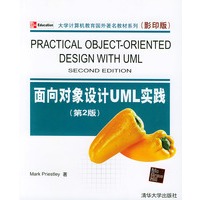
| Preface 1 Introduction to UML 1.1 Models and modelling 1.2 Methodologies 1.3 The Unified Modeling Language 1.4 Design models and code 1.5 The software development process 1.6 Summary 1.7 Exercises 2 Modelling with Objects 2.1 The object model 2.2 Classes and objects 2.3 Object properties 2.4 Avoiding data replication 2.5 Links 2.6 Associations 2.7 Message passing 2.8 Polymorphism 2.9 Dynamic binding 2.10 The applicability of the object model 2.l1 Summary 2.12 Exercises 3 Software Development Processes 3.1 The waterfall model 3.2 Alternatives to the waterfall model 3.3 The Unified Process 3.4 The role of models in development 3.5 The use of UML in the Unified Process 3.6 Summary 3.7 Exercises 4 Restaurant System: Business Modelling 4.1 Informal requirements 4.2 Use case modelling 4.3 Describing use cases 4.4 Structuring the use case model 4.5 Completing the use case model 4.6 Domain modelling 4.7 Glossaries 4.8 Summary 4.9 Exercises 5 Restaurant System: Analysis 5.1 The purpose of analysis 5.2 Object design 5.3 Software architecture 5.4 Use case realization 5.5 Recording new bookings 5.6 Cancelling bookings 5.7 Updating bookings 5.8 Completing the analysis model 5.9 Summary 5.10 Exercises 6 Restaurant System: Design 6.1 Receiving input from the user 6.2 Producing output 6.3 Persistent data storage 6.4 The design model 6.5 Detailed class design 6.6 Dynamic modelling of behaviour 6.7 A statechart for the booking system 6.8 A statechart for reservations 6.9 Summary 6.10 Exercises 7 Restaurant System: Implementation 8 Class and Object Diagrams 9 Interaction Diagrams 10 Statecharts 11 Component Diagrams 12 Consiraints 13 Implementation Strategies 14 Principles and Patterns Appendix A UML Notation Summary Appendix B Summary of the Object Constraint Language Appendix C A Template for use case descriptions References and Bibliography Index |



 内容加载中,请稍后...


商品评论(0条)