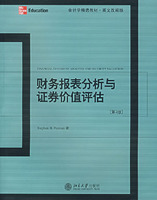
| 《财务报表分析与证券价值评估》(第3版)(英文改编版):概念框架:《财务报表分析与证券价值评估》(第3版)(英文改编版)首先建立了一个概念框架,以帮助读者理解企业如何运行、如何创造价值以及财务报表如何反映这些价值,并将企业运行的相关知识转化为价值评估,使分析建立在合理的基础之上。 实践导向:《财务报表分析与证券价值评估》(第3版)(英文改编版)阐述了大量财务报表分析与投资分析中常用的分析工具,并以著名公司的实例阐述了这些工具的运用。各章后的“会计分析丁具”专栏则对该章中出现的实际分析工具进行了总结。 战略导向:将价值分析与战略分析融为一体。以会计为基础的价值评估:《财务报表分析与证券价值评估》(第3版)(英文改编版)关注赢利预测以及如何将赢利预测转化为价值评估,认为会计利润更好地反映了企业创造的价值。在处理应计项目时,有机地将资产负债表与损益表结合在一起,从而使财务报表“活”了起来。 整合会计与金融:《财务报表分析与证券价值评估》(第3版)(英文改编版)将财务报表分析与基本面分析整合在一起,从而将会计的有关概念与金融的有关概念有机地结合在一起,将会计视为评价过程,会计准则被融入计价的准则之中。 行为主义方法:与市场有效假说的理念不同,《财务报表分析与证券价值评估》(第3版)(英文改编版)展示了积极的投资者如何在合理分析的基础上挑战市场、发现市场的错误定价从而获取超额利润的过程。 |
| Stephen H.Penman,哥伦比亚大学商学院George O.May教授和摩根士丹利研究学者,《会计研究评论》(Review of Accounting Studies)主编。研究领域为权益定价及会计信息在证券分析中的应用,1991年获得美国会计学会和美国注册会计师协会颁发的会计研究杰出贡献奖,2001年因本书获得美国会计学会和德勤颁发的Wildman奖。 |
| List of Cases List of Accounting Clinics Chapter 1 Introduction to Investing and Valuation Investment Styles and Fundamental Analysis Bubble, Bubble The Setting: Investors, Firms, Securities, and Capital Markets The Business of Analysis: The Professional Analyst The Analysis of Business Choosing a Valuation Technology How to Use this Book The Web Connection Key Concepts A Continuing Case: Kimberly-Clark Corporation Concept Questions Exercises Minicase Chapter 2 Introduction to the Financial Statements PART ONE FINANCIAL STATEMENTS AND VALUATION Chapter 3 How Financial Statements Are Used in Valuation Chapter 4 Cash Accounting,Accrual Accounting,and Discounted Cash Flow Valuation Chapter 5 Accrual Accounting and Valuation:Pricing Book Values Chapter 6 Accrual Accounting and Valuation:Pricing Earnings PART TWO THE ANALYSIS OF FINANCIAL STATEMENTS Chapter 7 Business Activities and Financial Statements Chapter 8 The Analysis of the Statement of ShareholdersEquity Chapter 9 The Analysis of the Balance Sheet and Income Statement Chapter 10 The Analysis of the Cash Flow Statement Chapter 11 The Analysis of Profitability Chapter 12 The Analysis of Growth and Sustainable Earnings PART THREE FORECASTING AND VALUATION ANALYSIS Chapter 13 The Value of Operations and the Evaluation of Enterprise Price-to-Book Ratios and Price-Earnings Ratios Chapter 14 Simple Forecasting and Simple Valuation Chapter 15 Full-Information Forecasting,Valuation,and Business Strategy Analysis PART FOUR ACCOUNTING ANALYSIS AND VALUATION Chapter 16 Creating Accounting Value and Economic Value Chapter 17 Analysis of the Quality of Financial Statements PART FIVE THE ANALYSIS OF RISK Chapter 18 The Analysis of Equity Risk and the Cost of Capital Chapter 19 The Analysis of Credit Risk Appendix A Summary of Formulas Index |


 内容加载中,请稍后...






商品评论(0条)