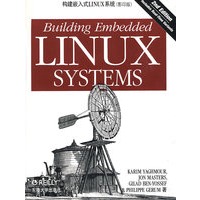
| “这本书中没有关于常用工具或项目范围的任何假设。所需要的……就是下载必要包和浏览详尽在线文档的Internet连接,从而与其他开发者互享经验并从中获益。 这些讲述不仅在设计上给予恰到好处的自由及控制,也紧承Linux嵌入式系统应用的开发先锋们的观点。” ——节自Preface |
| Preface 1.Introduction Definitions Real Life and Embedded Linux Systems Design and Implementation Methodology 2.Basic Concepts Types of Hosts Types of Host/Target Development Setups Types of Host/Target Debug Setups Generic Architecture of an Embedded Linux System System Startup Types of Boot Configurations System Memory Layout 3.Hardware Support Processor Architectures Buses and Interfaces I/O Storage General-Purpose Networking Industrial-Grade Networking System Monitoring 4.Development Tools A Practical Project Workspace GNU Cross-Platform Development Toolchain C Library Alternatives Java Perl Python Other Programming Languages Eclipse: An Integrated Development Environment Terminal Emulators 5.Kernel Considerations Selecting a Kernel Configuring the Kernel Compiling the Kernel Installing the Kernel In the Field 6.Root Filesystem Content Basic Root Filesystem Structure Libraries Kernel Modules Kernel Images Device Files Main System Applications Custom Applications System Initialization 7.Storage Device Manipulation MTD-Supported Devices Disk Devices To Swap or Not To Swap 8.Root Filesystem Setup Filesystem Types for Embedded Devices Writing a Filesystem Image to Flash Using an NFS-Mounted Root Filesystem Placing a Disk Filesystem on a RAM Disk Rootfs and Initramfs Choosing a Filesystem's Type and Layout Handling Software Upgrades 9.Setting Up the Bootloader Embedded Bootloaders Server Setup for Network Boot Using the U-Boot Bootloader 10.Setting Up Networking Services Network Settings Busybox Dynamic Configuration Through DHCP The Internet Super-Server Remote Administration with SNMP Network Login Through Telnet Secure Communication with SSH Serving Web Content Through HTTP Provisioning 11.Debugging Tools Eclipse Debugging Applications with gdb Tracing Performance Analysis Memory Debugging A Word on Hardware Tools 12.Introduction to Real-Time tinux What Is Real-Time Processing? Should Your Linux Be Real-Time? Common Real-Time Kernel Requirements Some Typical Users of Real-Time Computing Technology The Linux Paths to Real-Time 13.TheXenomai ReaI-TimeSystem Porting Traditional RTOS Applications to Linux The Xenomai Architecture How Xenomai Works The Real-Time Driver Model Xenomai, Chameleon by Design 14.The RT Patch Interrupts As Threads Priority Inheritance Configuring the Kernel with the RT Patch High-Resolution Timers The Latency Tracer Conclusion Index |


 内容加载中,请稍后...







商品评论(0条)