网上购物 货比三家
您现在的位置:快乐比价网 > 图书 > 经济管理 > 经济管理 > 商品详情

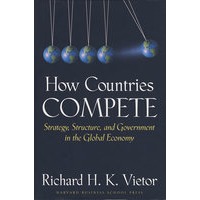
How Countries Compete 经济全球化时代的国家竞争

分享到:
How Countries Compete 经济全球化时代的国家竞争

最 低 价:¥235.40

定 价:¥298.00

作 者:Richard H. K. Vietor 著

出 版 社:

出版时间:2007-1-1

I S B N:9781422110355

商品详情

编辑推荐

内容简介

Business and political leaders often talk about what their respective countries must do to compete in the world economy. But what does it really mean for a country to compete, and how do they do this successfully? As the world has globalized, countries develop strategies to compete for the markets, technologies, and skills that will raise their standards of living. These government strategies can make—or break—a nation’s efforts to drive and sustain growth.
In How Countries Compete: Strategy, Structure and Government in the Global Economy, Richard Vietor shows how governments set direction and create the climate for a nation’s economic development and profitable private enterprise. Drawing on history, economic analysis, and interviews with executives and officials around the globe, Vietor provides rich and insightful examinations of different government approaches to growth and development--leading to both success and failure.
  Individual chapters focus on the unique social, economic, cultural, and historical forces that shape governments’ approach to economic growth. Countries discussed include: China, India, Japan, Singapore, the United States Mexico, Russia, Saudi Arabia, and South Africa. Vietor challenges the widespread notion that, in market-driven economies such as the United States, a strong government can only hinder business success.
  A provocative account and a rich resource, How Countries Compete offers potent insights into how the business environment has evolved in crucial nations—and what its trajectory might look like in the future.

作者简介

目录

INTRODUCTION Countries Compete
ONE Development Strategy and Structure
Part I Pathways to Asian High Growth
TWO Japaffs Economic Miracle
 THREE Singapore, Inc
 FOUR China: The Pragmatic State riVE India on the Move
Part II The Difficulties of Structural Adjustment
 Six Mexico: Incomplete Transition
 SEVEN South Africa: Getting in GEAR
 EIGHT Saudi Arabia: Modernization Versus Westernization
 NINE Institutional Collapse and Recovery in Russia
Part III Deficits, Debt, and Stagnation
 TEN European Integration and Italian Competitiveness
 ELEVEN Japan: Beyond the Bubble
 TWBLVE Managing the American Dream
 CONCLUSION Trajectories of Globalization
 Notes
Index
Acknowledgments
About the Author

商品评论(0条)

暂无评论!

您的浏览历史

loading 内容加载中,请稍后...