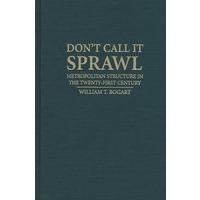
| William T. (Tom) Bogart has been Dean of Academic Affairs at York College of Pennsylvania since 2002. From 1990 to 2002, he was a member of the Case Western Reserve University (CWRU) faculty in the Weatherhead School of Management. While at CWRU, he served as chair of the Department of Economics and as a research associate of the Center for Regional Economic Issues. His work was recognized with the Outstanding Dissertation Award from the National Tax Association. Previous publications include, The Economics of Cities and Suburbs (1998). He lives in York, Pennsylvania with his wife and daughter. |
| Acknowledgments 1 The World of Today Why My View Is Different What Does a Typical Metropolitan Area Look Like? Mental Models of Metropolitan Areas New Metropolitan Structure: Atlanta and Los Angeles (and Cleveland and Pittsburgh!) It's Not Sprawl or Edge Cities: It's Trading Places Plan of the Book 2 Making Things Better: The Importance of Flexibility Efficiency and Equity: How Economists Evaluate Outcomes Policy Design in Action: A Regional Plan Crusading Policy versus Persuading Policy Entrepreneurship in Metropolitan Areas The Present as a Weighted Average of the Past Utopian Metropolitan Structure 3 Are We There Yet? Evolving Metropolitan Structure Theories of Metropolitan Structure Specialization and Trade Patterns of Trade What Is Urban Sprawl? Sprawl and the Urban Fringe Urban Growth and Structural Change: The Neverending Story 4 Trading Places Specialization in Production: Evidence from Employment Centers Size Distribution of Employment Centers Characterizing Commuting to Metropolitan Employment Centers Municipalities as Small Countries Structure and Specialization, Not Sprawl 5 Downtown: A Place to Work, a Place to Visit, a Place to Live Downtown as a Trading Place Central City Economic Development Stadium Construction as a Downtown Development Tool Living for the City Declaring Victory: When Can a Local Government Stop Subsidizing Activity? 6 How Zoning Matters Externalities How Zoning Is Like a Tax Zoning and Trade Analyzing the Impact of Zoning Toward a Dynamic Model Does Zoning Have a Major Impact on Urban Structure? Alternatives to Zoning What Houston Suggests about Zoning Eminent Domain and Development 7 Love the Density, Hate the Congestion Commuting: How Bad Is It? Controlling Congestion Travel Forecasts and Reducing Congestion Municipal Waste 8 Homogeneity and Heterogeneity in Local Government Intrametropolitan Competition for Businesses Regionalism and Getting an Education Effective Change: Targeting Subsidies to the Undeserving Regional Service Provision Heterogeneity through Homogeneity: Neighborhood Associations Winners and Losers: The View from Ancient Rome 9 The World of Tomorrow Never Capitulate, but Always Recapitulate Encouraging Trade among Trading Places Twenty-First-Century Metropolitan Structure: Good or Bad? Twenty-First-Century Metropolitan Areas: A Chance to Reinvent the City? The New Urban Hierarchy Notes References Index |




 内容加载中,请稍后...



商品评论(0条)