网上购物 货比三家
您现在的位置:快乐比价网 > 图书 > 经济管理 > 理财 > 商品详情

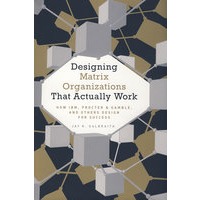
Designing Matrix Organizations That Actually Work: How IBM, Procter & Gamble, And Others Design For Success矩阵组织运转设计:如何像IBM与宝洁公司那样成功运作

分享到:
Designing Matrix Organizations That Actually Work: How IBM, Procter & Gamble, And Others Design For Success矩阵组织运转设计:如何像IBM与宝洁公司那样成功运作

最 低 价:¥249.00

定 价:¥380.00

作 者:Jay R. Galbraith 著

出 版 社:

出版时间:2008-11-1

I S B N:9780470316313

商品详情

编辑推荐

内容简介

Organization structures do not fail, says Jay Galbraith, but management fails at implementing them correctly. This is why, he explains, the idea that the matrix does not work still exists today, even among people who should know better. But the matrix has become a necessary form of organization in today's business environment. Companies now know that if they have multiple product lines, do business in multiple countries, and serve many customer segments through a variety of channels, there is no way they can avoid some kind of a matrix structure—and the question most are asking is "How do we learn how to operate the matrix effectively?" In Designing Matrix Organizations That Actually Work, Galbraith answers this and other questions as he shows how to make a matrix work effectively.
  Drawing on his forty years of experience in studying and consulting with matrix organizations, Galbraith first defines what they are, tells why they are chosen, and explains why there have been failures. He provides for a complete design of the matrix organization using his Star Model, a tested framework that aligns changes in structure, processes, rewards, and people practices. The Star Model consists of policies that leaders can control and that can affect employee behavior. It shows that managers can influence performance and culture—but only by acting through the design policies that affect behavior. In order to make a matrix work, the author reveals, good relations between departments are needed, planning processes are necessary to get aligned goals, the aligned goals must go into the reward system, and people who are matrix savvy must be selected and developed. Using examples from IBM, Nokia, Procter & Gamble, and other successful corporations, he clearly illustrates the planning processes, reward systems, and human resources practices of successful implementers of the matrix.

作者简介

目录

Preface
Introduction: Matrix Organizations: What Are They?
Where Did They Come From?
What Is a Matrix?
What Are the Origins of the Matrix?
What Happened?
The Star Model
Implications of the Star Model
Part One: Simple Matrix Orqanizations
1. Simple Matrix Structures
Two-Dimensional Structures
  Pharmaceutical R&D Lab Example
  Summary
 2. The Two-Hat Model
What Is the Two-Hat Model?
Examples of Two-Hat Structures
Summary
 3.The Baton Pass Model
  The Consumer Goods Model
  The Pharmaceutical Model
  Summary
 4.The Matrix Within a Matrix
  Design Challenges of the Matrix Within a Matrix
  Matrix Within a Matrix at the Corpora feLeVel
  Mars Pet Food Example
  Summary
 5. Balancing Power and Defining Roles
  Designing Power Bases
  Roles and Responsibilities
  Summary
Part Two: Complex Matrix Structures
 6. The Three-Dimensional Matrix
  International Strategy
  The Geography-Dominant Matrix
  The Balanced Matrix
  The Business-Dominant Matrix
  Differentiated Structures
  Other Three-Dimensional Models
  Summary
 7. More Complex Matrix Structures
  Global Account Teams
  The Front-Back Hybrid Model
  Summary
 8. The IBM Structure
  The IBM Front-Back Hybrid
  More Complexity?
  Summary
Part Three: Completinq the Star Model
 9. Communication in the Matrix
   Informal Communication
   Formal Communication
   Summary
 10. Planning and Coordination Processes
   Goal Alignment, Dispute Resolution, and Coordination Mechanisms
   Summary
……
References
About the Author
Index

商品评论(0条)

暂无评论!

您的浏览历史

loading 内容加载中,请稍后...