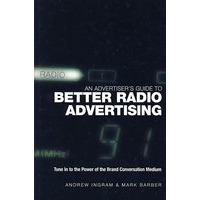
最 低 价:¥310.60

| 作者简介: Mark Barber After graduating from the University of Life, Mark spent 18 years as a media planner in a variety of media agencies before joining the Radio Advertising Bureau in 2001. He has been using radio as an advertising medium since 1983, during which time his perspective has moved from audience cost-per-thousands to the communication benefits of the medium. Mark’s previous contributions to radio literature include Understanding Radio, the Brand Conversation Medium and Radio Advertising Effectiveness for Dummies. In his spare time, he supports Charlton Athletic, is teaching himself to speak Turkish, and entertains his children with bad jokes and poorly executed magic tricks. |
| Foreword by Jo Kenrick How to use this book Acknowledgements About the authors SECTION 1: The Case for Change 1 The Scale of the Medium 1.1 The development of commercial radio in the UK 1.2 Measurement and growth of the commercial radio audience 1.3 Who listens to commercial radio? 1.4 Radio’s status as an advertising medium 1.5 What does the future hold for commercial radio? 1.6 Summary 2 The ‘True’ Radio Context 2.1 Why and how people listen 2.2 Radio’s media attributes 2.3 How radio communicates 2.4 Effectiveness of the medium 2.5 Summary 3 The Need for a Different Approach 3.1 Why the need for a different approach? 3.2 Why does radio advertising have to be creative? 3.3 Why aren’t we better at using radio? 3.4 The challenges and opportunities of the medium 3.5 Summary SECTION 2: Harnessing the True Power of Radio 4 What is Advanced Level Creativity? 4.1 Effectiveness is a relative term 4.2 Three common structural problems 4.3 The crucial importance of brand linkage 4.4 Realism vsshooting for the moon 4.5 Thinking at campaign level 4.6 Summary 5 Best Practice Process for Creating Better Radio 5.1 Providing the optimum radio brief 5.2 Judging good radio ideas 5.3 The art of radio production 5.4 Branding in sound 5.5 Summary 6 Measuring Radio’s Effect 6.1 Defining the research objectives 6.2 The importance of split samples 6.3 Where to do the research 6.4 When to do the research 6.5 Sample sizes 6.6 Method and questionnaire 6.7 Measuring the short-term sales effects of radio 6.8 Measuring the effect of radio sponsorships and promotions 6.9 Summary SECTION 3: Thinking about Radio as ‘New Media’ 7 The New Challenges Facing Brand Communications 8 Radio’s Role in Emerging Brand Thinking SECTION 4: The Seven-Step Guide to Better Radio Advertising 9 The Seven-Step Guide to Better Radio Advertising SECTION 5: Appendices Appendix 1: The RAB Bus Research Study Appendix 2: Radio Script Appendix 3: Online Radio Ads Track Listing (www.better-radio-advertising.co.uk) References Index |




 内容加载中,请稍后...


商品评论(0条)