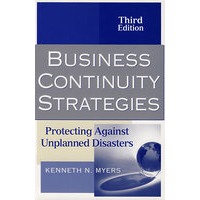
| 作者介绍:KENNETH N. MYERS KENNETH N. MYERS is an internationally recognized contingency planning specialist and educator. He has developed business continuity strategies for leading organizations in the United States, Europe, Mexico, and Puerto Rico. Mr. Myers developed the curricula and was the course leader for contingency planning seminars for The Battelle Institute and the American Management Association and was called to consult with the largest tenant in the World Trade Center following its bombing. In this book, he presents a new contingency program paradigm reflecting the latest in contingency strategies development thinking as well as the impact of terrorism and workplace violence on business continuity needs. He is also the author of Manager's Guide to Contingency Planning for Disasters: Protecting Vital Facilities and Critical Operations and Total Contingency Planning for Disasters: Managing Risk . . . Minimizing Loss . . . Ensuring Business Continuity, both published by Wiley. |
| About the Author. Preface. 1 Defining the Problem. Business Continuity Concerns. Characteristics of a Sound Program. Cost-Reduction Opportunities. Need for Cost-Effective Solutions. Backup. 2 Workplace Violence. Background. Liability. Prevention. Incident Response. 3 Final Reports of the Federal Building and Fire Investigation of the World Trade Center Disaster. Introduction. Increased Structural Integrity. Enhanced Fire Endurance of Structures. New Methods for Fire-Resistant Design of Structures. Improved Active Fire Protection. Improved Building Evacuation. Improved Emergency Response. Improved Procedures and Practices. Education and Training. Looking Forward. 4 New Contingency Program Paradigm. Background. Old Paradigm. New Paradigm. Transitioning to the New Paradigm. 5 Developing a Contingency Program. Management’s Responsibility. How Much Market Share Could Cost You? Protect Against What? Contingency Planning Requires Specialization. Increased Technology Dependency. Corporate Issue. Contingency Program Phases. Discretionary Expense. Project Planning. Awareness Education. Business Impact Analysis. Selecting a Methodology. Implementation. Maintenance and Testing. 6 Guidelines for Developing Contingency Programs at Multiple Locations. Background. Objectives and Scope. Section Ⅰ: Organization. Section Ⅱ: Standards for Implementation Planning. Section Ⅲ: Standards for Developing Interim Processing Strategies. Section Ⅳ: Documentation Standards. Section Ⅴ: Standards for Ongoing Maintenance and Testing. 7 Conceptual Business Continuity Strategies for Loss of Computer Operations. Policy and Strategy. Executive Summary. Glossary. Index. |




 内容加载中,请稍后...



商品评论(0条)