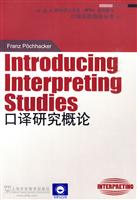
| 《口译研究概论》是一部编排科学的口译研究入门教材,对口译研究的理论基础、选题及其研究方法以及研究趋向等进行了庞而不杂、条理清晰的综述,是口译研究的学科理论奠基之作。该书自出版以来在翻译研究界及口译研究界均受到高度评价。翻译研究界的代表人物莫纳·贝克(Mona Baker)称,“这本以读者为本的实用教科书是口译研究这门重要的新兴学科的一个权威路线图。”国际口译界的最大行业组织“国际译员协会”(AIIC)也发表评论称,“该书的出版是对口译研究领域的一大贡献。” |
| 刜兰茨·波契哈克(Franz.Pǎchhacker)博士现任奥地利维也纳大学翻译学研究中心副教授,学术期刊《口译》(Interpreting)的主编之一,是当今本方较有影响力的口译研究者。 |
| list of figures acknowledgements introducing introducing… part i foundations 1 concepts 1.1 conceptual roots 1.2 interpreting defined 1.3 settings and constellations 1.4 typological parameters 1.5 domains and dimensions 2 evolution 2.1 socio-professional underpinnings 2.2 breaking ground: professionals and psychologists 2.3 laying academic foundations 2.4 renewal and new beginnings 2.5 consolidation and integration 2.6 interpreting studies in the twenty-first centuy 3 approaches 3.1 disciplinary perspectives 3.2 memes of interpreting 3.3 methodology 4 paradigms 4.1 the notion of ‘paradigm' 4.2 forging a paradigm 4.3 experimenting with interpreting 4.4 aspiring to science 4.5 broadening the view 4.6 focusing on interaction 4.7 unity in diversity 5 models 5.1 on modeling 5.2 socio-professional and institutional models 5.3 interaction models 5.4 processing models 5.5 models, tests and applications part ii selected topics and research 6 process 6.1 bilingualism 6.2 simultaneity 6.3 comprehension 6.4 memory 6.5 production 6.6 input variables 6.7 strategies 7 product and performance 7.1 discourse 7.2 source-target correspondence 7 3 effect 7.4 role 7.5 quality 8 practice and profession 8.1 history 8.2 settings 8.3 standards 8.4 competence 8.5 technology 8.6 ecologyl 8.7 sociology 9 pedagogy 9.1 curriculum 9.2 selection 9.3 teaching 9.4 assessment 9.5 meta-level training part iii directions 10 directions 10.1 trends 10.2 perspectives 10.3 orientation bibliography internet links author index subject index |




 内容加载中,请稍后...






商品评论(0条)