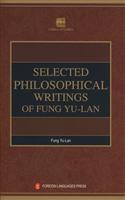
| The two works mentioned above titan Pah I ofthisbook,alld six essays on Chinese philosophy and a speechform PartII. All the essays except the first one ale supplementsto and developmentt of his two volume tlistory.Thefirst essay,entitled“Why China Has No Science”andpublished in the International Journal of Ethies in 1922,interprers and answers this question mainly throughphilosophy(i.e.ideology),though it also points out:the imporralice of geography,climate and economicconditions.Another essay,“Philosophy in Contempo-rary China.”first read before the Eighth InternationalPhilosophy Congress,Prague,1934,updates his His-wry to comment on the development of philosophy in China since the May 4rh Movement of 1919。 This book is conduded by the“Speech of ResponseDelivered at the Convocadon ofSeptember 10.1982 inColumbia University”when Fung was bestowed thcdegree of Doctor of Leiters.bonoris causa,at Colum-bia University.In this speech he Fcviews his long jour-ncy of sixtY years after his graduation from Columbia and the three stages of development of his academicthought.He says:“I live in a period of conflict andconrradiction between difieredt cultures.My problemis how co understand the nature of this conflict andcontradiction,how to deal with it,and hoW to adjustmyself within this conflict and contracliction.I alwaysrecall one line that appears in the Book ofPoetry of theConfucian classics.It reads,'AIthough Chou is arl oldnafion,it has a new mission……China is an ancientnation which has a new mission,and that nlission ismodernization。”For sixty years Fung's efforts have been,in his own words,“to preserve the identity and indi-viduality of the ancient nation,yet,at the same time,to promore the fillfillmenl:ofthe new mission.” |
| a comparative study of life ideals introduction part ⅰ the idealization of nature and the way of decrease chapter ⅰ romanticisms: chuang tzu chapter ⅱ idealism: plato chapter ⅲ nihilism: schopenhauer chapter ⅳ conclusion of part ⅰ part ⅱ the idealization of art and the way of increase chapter ⅴ hedonism: yang chu chapter ⅵ utilitarianism: mo tzu chapter ⅶ progresivism: descartes, bacon, and fichte chapter ⅷ conclusion of partⅱ part ⅲ the idealization of the continuity of nature and art and the good of activity chapter ⅸ confucius chapterⅹ aristotle chapter ? neo-confucianism chapter ? hegel chapter ⅹⅲ conclusion of part ⅲ chapter ⅹⅳ general conclusion a short history of chinese philosophy chapter ⅰ the spirit of chinese philosophy chapterⅱ the background of chinese philosophy chapter ⅲ the origin of the schools chapter ⅳ confucius, the first teacher chapter ⅴ mo tzu, the first opponent of confucius chapter ⅵ the first phase of taoism: yang chu chapter ⅶ the idealistic wing of confucianism: mencius chapter ⅷ the school of names chapter ⅸ the second phase of taoism: lao tzu chapter ⅹ the third phase of taoism: chuang tzu chapter ? the later mohists chapter ? the yin-yang school and early chinese cosmogony chapter ⅹⅲ the realistic wing of confucianism: hsun tzu chapter ⅹⅳ han fei tzu and the legalist school chapter ⅹⅴ confucianist metaphysics chapter ⅹⅵ world politics and world philosophy chapter ⅹⅴⅱ theorizer of the han empire tung chung--shu chapterⅹⅴⅲ the ascendancy of confucianism and revival of taoism chapter ⅹⅸ neo-taoism: the rationalists chapter ⅹⅹ neo-taoism: the sentimentalists chapter ⅹⅹⅰ the foundation of chinese buddhism chapter ⅹⅹⅱ chanism: the philosophy of silence chapterⅹⅹⅲ neo-confucianism: the cosmologists chapter ⅹⅹⅸ neo-confucianism: the beginning of the two schools chapter ⅹⅹⅴ neo-confucianism the school of platonic ideas chapter ⅹⅹⅴⅰ neo-confucianism: the school of universal mind chapter ⅹⅹⅴⅱ the introduction of western philosophy chapter ⅹⅹⅴⅲ chinese philosophy in the modern world essays and speeches why china has no science--an interpretation of the history and consequences of chinese philosophy the confucianist theory of mourning, sacrificial and wedding rites the place of confucius in chinese history philosophy in contemporary china the origin ofju and mo the philosophy at the basis of traditional chinese society the traditional chinese family system a general statement on neo-confucianism speech of response delivered at the convocation of september 10,1982, at columbia university index |


 内容加载中,请稍后...




商品评论(0条)