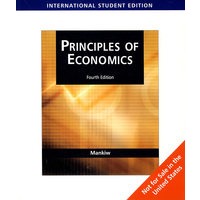
| 作者简介: N. Gregory Mankiw is Professor of Economics at Harvard University. As a student, he studied economics at Princeton University and MIT. As a teacher, he has taught macroeconomics, microeconomics, statistics, and principles of economics. He even spent one summer long ago as a sailing instructor on Long Beach Island. Professor Mankiw is a prolific writer and a regular participant in academic and policy debates. His research includes work on price adjustment, consumer behavior, financial markets, monetary and fiscal policy, and economic growth. His published articles have appeared in academic journals, such as the American Economic Review, Journal of Political Economy, and Quarterly Journal of Economics, and in more widely accessible forums, such as The New York Times, The Washington Post, The Wall Street Journal, and Fortune. In addition to his teaching, research, and writing, Professor Mankiw has been a research associate of the National Bureau of Economic Research, an adviser to the Federal Reserve Bank of Boston and the Congressional Budget Office, and a member of the ETS test development committee for the advanced placement exam in economics. From 2003 to 2005 he served as Chairman of the President's Council of Economic Advisers. Professor Mankiw lives in Wellesley, Massachusetts, with his wife, three children, and border terrier Tobin. --This text refers to an out of print or unavailable edition of this title. |
| PART 1 INTRODUCTION 1.Ten Principles of Economics 2.Thinking Like an Ecomominst 3.Interdependence and the Gains from Trade PART 2 HOW MARKETS WORK 4.The Mrket Forces of Supply and Demand 5.Elasticity and lts Application 6.Supply,Demand,and Government Policies PART 3 MARKETS AND WELFARE 7.Consumers,Producers,and the Efficiency of Markets 8.Application;The Costs of Taxation 9.Application;lnternational Trade PART 4 THE ECONOMICS OF THE PUBLIC SECTOR 10.Externalities 11.Public Goods and Common Resources 12.The Design of the Tax System PART 5 FIRM BEHAVIOR AND THE ORGANIZATION OF INDUSTRY 13.The Costs of Production 14.Firms in Competitive Markets 15.Monopoly 16.Oligopoly 17.Monopolistic Competition PART 6 THE ECONOMICS OF LABOR MARKETS 18.The Markets for the Factors of Production 19.Earnings and Discrimination 20.Income lnequality and Poverty PART 7 TOPICS FOR FURTHER STUDY 21.The Theory of Consumer Choice 22.Frontiers of Microeconomics PART 8 THE DATA OF MACROECONOMICS 23.Neasuring a Nation's lncome 24.Measuring the Cost of Living PART 9 THE REAL ECONOMY IN THE LING RUN 25.Production and Growth 26.Saving,lnvestment,and the Financial System 27.The Basic Tools of Finance 28.Unemployment PART 10 MONEY AND PRICES IN THE LONG RUN 29.The Monetary System 30.Money Growth and lnflation PART 11 THE MACROECONOMICS OF OPEN ECONOMIES 31.Open-Fconomy Macroeconomics:Basic Concepts 32.A Macroeconomic Theory of the Open Economy PART 12 SHORT-RUN ECONOMIC FLUCTUATIONS 33.Aggregate Demand and Aggregate Supply 34.The lnfluence of Monetary and Fiscal Policy on Aggregate Demand 35.The Short-Run Trad-off between lnflation and Unemployment PART 13 FINAL THOUGHTS 36.Five Debates over Macroeconomic Policy Appendix:Quick Quiz Answers Glossary Index |



 内容加载中,请稍后...





商品评论(0条)